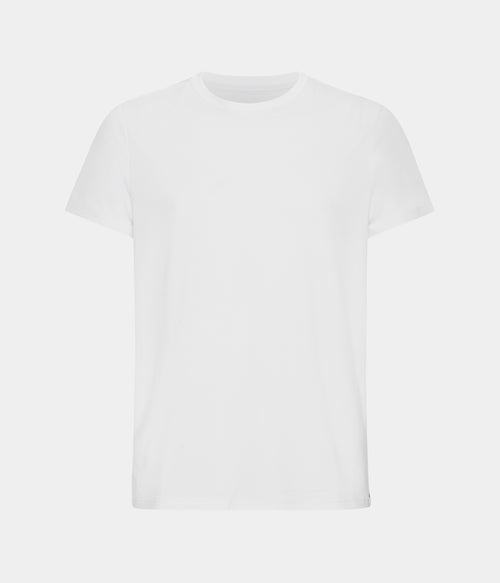
A T-shirt as the innermost layer, what it has to do
Sep 12, 2026
Short answer: It should sit against the skin, move moisture away and be thin enough not to add bulk. The colour should suit what you wear on top, so the neckline and sleeves do not stand out.
Skin contact is a must
Moisture is only moved away if the fabric touches the skin. A loose T-shirt as a base layer hangs in the air and makes no difference, because the moisture stays on your skin. The base layer should sit lightly against you all the way, without pulling across chest and shoulders. See the closer fitting styles in men's bestsellers.
Thin fabric under everything else
A thick base layer creates folds and heat under a sweatshirt and can make it harder to move your arms. Thin fabric lies flat and lets the outer layers do the job of keeping you warm. Bamboo viscose is light and soft and hardly noticeable under a sweater. See the fabrics in women's bestsellers, cut to follow the body.
Match the colour to the outer layer
Black under dark and white or light grey under light, so the neckline and sleeves do not look wrong. Under a shirt with an open collar, a dark T-shirt can show through clearly, so a colour close to your skin tone is often most discreet. See the colours in the men's range and choose for what you most often wear on top.
Flat seams and no label
A base layer sits close to the skin all day, so seams and labels are felt more than in a normal T-shirt. Flat seams chafe less, and a label printed on the fabric or placed in the side seam is more comfortable than a stiff one at the neck. Turn the T-shirt inside out and feel before buying more.
Short or long sleeves
In winter, long sleeves add an extra layer on the arms that makes a clear difference under a jacket. The rest of the year short sleeves are enough, and they add less bulk under a shirt. Make sure the base layer sleeves are shorter than the ones on top, so they do not peek out at the wrist.
Under a shirt at the office
A thin T-shirt under your shirt absorbs moisture, so the shirt stays dry and clean for longer. Choose a low crew neck, or a V-neck if you wear the shirt with an open collar. That way the base layer does not show. The fit should be close enough to avoid folds under the shirt.
Outdoors in cold weather
When you are active outside in winter, the base layer helps keep you dry, and staying dry is what keeps you warm. A damp layer against the skin cools you when you stop. Add a warm layer on top and a windproof jacket outside, and take a layer off if you start to sweat.
Wash and change daily
The base layer takes up the most moisture, so it should be changed every day. Wash it inside out at 40 degrees, skip fabric softener and let it air dry. With several identical pieces you can switch without thinking, and they wear more evenly. That way the fabric keeps its shape and stays soft.
Frequently asked questions
Can you use a normal T-shirt as a base layer
Yes, if it is thin and sits close. A loose T-shirt works poorly, because it does not touch the skin and so does not move moisture away.
Should the sleeves be long
In winter yes, especially outdoors. The rest of the year short sleeves are enough as a base layer, and they add less bulk under a shirt.
How often should the base layer be changed
Daily. It is the layer that absorbs the most moisture, so it should be washed after each day of wear to stay fresh.