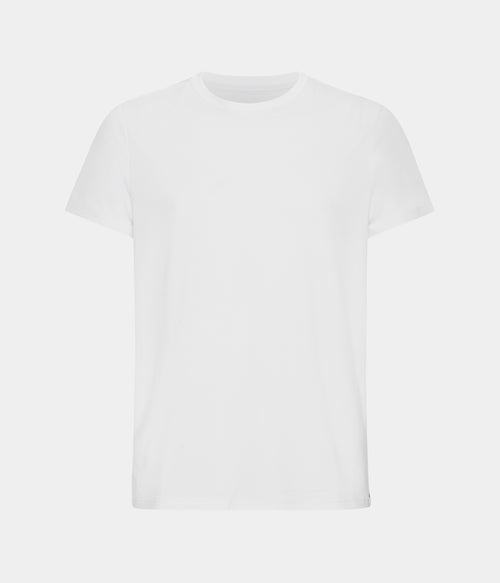
A T-shirt for training, what to know
Sep 12, 2026
Short answer: For training, a T-shirt needs to move moisture quickly and not chafe under the arms. Bamboo viscose feels softer than synthetics but dries a little more slowly, so the choice depends on how hard you train.
Moisture transport matters most
During exercise your skin gives off more moisture than fabric can hold. What matters is not how much the fabric absorbs, but how quickly it passes the moisture on to the air. A T-shirt that turns heavy and wet clings and gets in the way. See the styles in bamboo sweatwear, made for calm use and light activity.
Seams under the arms
Chafing under the arms comes from repeated movements like running, rowing and arm swings. A thick or stiff seam rubs against the skin hundreds of times in one session. A flat seam can make the difference between thirty minutes and two hours. See the fits in women's bestsellers and check where the seams sit.
Change straight after
A damp T-shirt against the skin after training cools you down fast, especially outdoors and in winter. Change into something dry as soon as you finish, and avoid getting into the car or onto the bike in wet clothes. Pack a clean top from the men's range in your bag.
Bamboo or synthetic
Bamboo viscose feels soft against the skin and is comfortable for yoga, walks, steady strength training and warming up. For very sweaty sessions like running in the heat or intervals, synthetic fabrics dry faster because the fibres take up less water. Many people use bamboo for calm training and everyday wear, and synthetics for the hardest sessions.
Fit for the type of training
For running and cycling, the T-shirt should be close enough not to flap, but without pulling across the chest. For strength training, a little more room over the shoulders helps you lift your arms freely. For yoga, a longer style is practical because it does not ride up when you bend forward or lie on the mat.
Washing training clothes
Training clothes should be washed after every use, because sweat and skin oils settle in the fibres. Wash at 40 degrees with a full dose of detergent and turn the clothes inside out so the inside gets properly clean. Skip fabric softener, which leaves a film on the fibres that can hold on to odour. Let them air dry.
Do not leave clothes in the bag
Wet T-shirts crumpled in a bag for hours are the quickest route to a bad smell. Hang them up as soon as you get home, even if they will not be washed until later. Air and dryness make it harder for bacteria to multiply, and the wash works better when the clothes have not been damp for long.
Layers for outdoor training
If you train outside in cold weather, the inner layer matters most. It should sit against the skin and move moisture away, while a thin layer on top keeps you warm. Take the outer layer off when you heat up so you do not sweat more than needed. After training, the dry change again makes the biggest difference.
Frequently asked questions
Is bamboo good for hard training
For regular training yes. For very sweaty sessions, synthetic fabrics dry faster, so it can make sense to choose those instead.
Why do training clothes smell after washing
Bacteria and skin oils get stuck in the fibres. Wash at 40 degrees with a full dose, turn the clothes inside out and skip fabric softener.
Should the T-shirt fit close
Close enough to touch the skin, since otherwise the moisture is not moved away. It should not be so tight that it limits your movement.