A week of clothes, how to plan it
Sep 12, 2026
Short answer: A week takes fewer pieces than most people think, if you plan around laundry day rather than the days themselves. Seven sets and five tops cover an ordinary working week.
Plan around laundry day
What matters is not how many days the week has, but how often you wash. If you wash on Sunday and Wednesday, your wardrobe only has to cover three to four days at a time. You can manage with fewer pieces, as long as the washing runs regularly. Start with the innermost layer, since it is changed daily, see bamboo underwear for men.
Seven sets of underwear
Underwear is changed every day, so there are no shortcuts here. Seven sets cover a whole week, even if a wash gets skipped. With fewer, you depend on the laundry always being on time, and each piece wears faster because it is used more often. Seven is a calm starting point for most people.
Tops can be worn twice
A top that has not been sweaty can easily be worn the next day. Hang it up to air in the evening instead of putting it straight in the laundry. That way five to six tops last a whole working week. Choose ones that go with the rest of your wardrobe, so they can be rotated, see bamboo t-shirts for men.
Socks are the exception
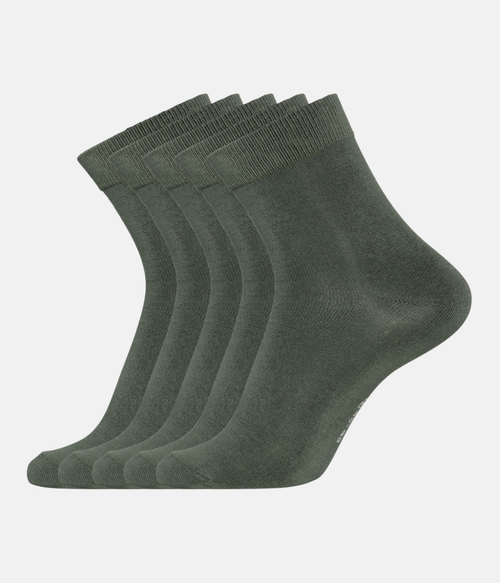
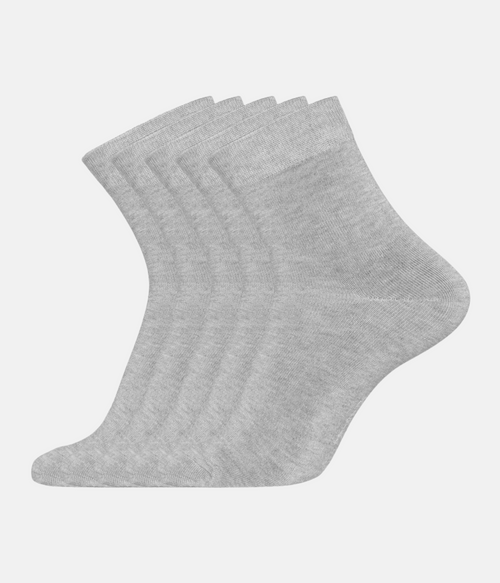
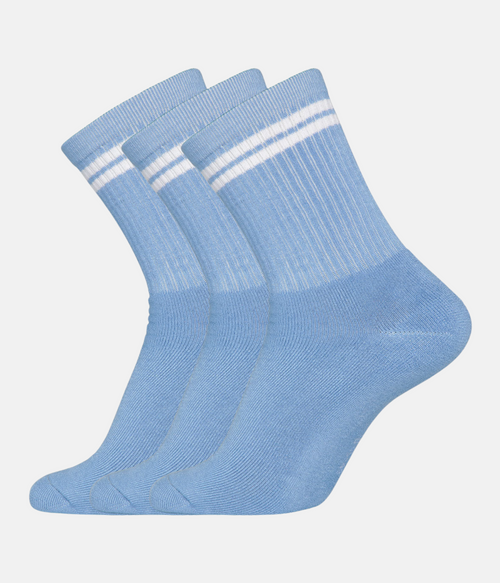
Socks need changing every day, whatever the rest of the wardrobe can handle. Feet sweat more than the rest of the body, and socks sit tight in your shoes all day. Seven pairs is the minimum you should own. A few extra do no harm, because socks go missing in the wash more often, see bamboo socks for men.
Plan on Sunday evening
Five minutes on Sunday evening saves time every morning for the rest of the week. Look at the calendar, check for days with meetings, training or travel, and set out clothes accordingly. You do not need to lay out a full set for each day. It is enough to know there is enough clean clothing until the next wash.
Keep the colours simple
The more pieces go together, the fewer you need. If you stick to a few base colours, every top works with everything else in the drawer. Then you do not have to think about combinations in the morning, and you can take the top piece without looking. It makes a small wardrobe far more flexible in daily life.
Keep a buffer
Even with a fixed plan, things happen. A day runs long, a wash gets postponed, or a top picks up a stain. Keep one or two extra pieces that you do not count in the plan. Then you are never without clean clothes on a busy morning, and the plan holds even when the week does not.
Notice what wears out
When you wear the same small wardrobe week after week, you quickly see what wears out first. It is usually underwear and socks, because they are changed most often. Watch for loose elastic and thin heels, and replace pieces before they give up. That way your regular week holds without something suddenly going missing halfway through.
Frequently asked questions
How many clothes does a week need
Seven sets of underwear, seven pairs of socks and five to six tops cover most working weeks, as long as you wash at least twice a week.
Can you wear the same top two days running
Yes, if the day was calm and the fabric has aired overnight. That does not apply to socks and underwear, which should be changed every day.
When should you plan the week
Sunday evening takes five minutes and saves time every morning. Look at the calendar and check there are enough clean clothes for the days ahead.