Clothes under the uniform
Sep 12, 2026
Short answer: The uniform decides the outside, but the layer underneath decides how the day feels. It is the only part you can choose yourself, and it matters more than people think. Underwear, a thin T-shirt and socks make the biggest difference.
What you can choose yourself
If you wear a uniform at work, most things are decided in advance: fabric, cut, colour and often the shoes too. But what sits closest to the skin is usually up to you. That layer touches the body all day and decides whether you feel dry and at ease, or keep thinking about your clothes.
Uniform fabric rarely breathes well
Many uniforms are made from dense, hard wearing fabrics that do not move moisture. They need to survive many washes and heavy use, often at the expense of breathability. When you move or stand in a warm room, moisture stays between the skin and the uniform. This is where the layer underneath can help. See bamboo boxers.
The layer underneath does the work
A thin layer that absorbs moisture keeps the skin dry under a closed outer fabric. It does not need to be thick. A thin layer is actually better, because it does not make the uniform tight and adds no extra warmth. What matters is that it lies calmly against the skin and takes moisture away before it feels clammy.
Socks are the second place
Your feet are in closed shoes the whole shift, and many uniforms have fixed rules for footwear. Socks are therefore the second place where you decide. A sock that absorbs and moves moisture makes a big difference over a long day. Choose a colour that fits the uniform rules. See socks for men.
The colour should not show through
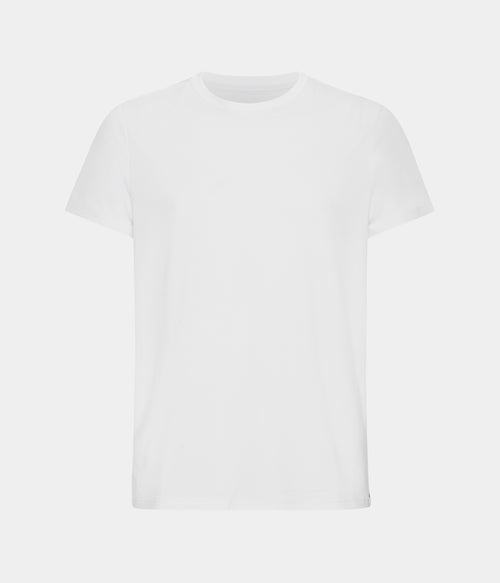
Under a light uniform the layer underneath should be skin tone rather than white. White shows most clearly through light fabric, because it contrasts with the skin. A skin tone blends with the body and becomes almost invisible. Under a dark uniform, black is the most discreet choice. See bamboo T-shirts for men.
Fit under the uniform
The layer underneath should fit closely enough not to fold, but not so tight that it pinches. Folds and edges under a smooth uniform are easy to see and quick to feel when you move. Choose a T-shirt with a neckline that does not peek out, and underwear with waistbands that lie flat.
Changing and washing
A layer worn against the skin all day has collected sweat and should be washed after use. If you work long shifts or do physical work, a spare set to change into can be a good idea. Wash at forty degrees and hang to dry, and it will keep its shape for many shifts.
A small change with a big effect
You can rarely change the uniform itself, but you can change how it feels. Start with the two places you decide: the layer on your upper body and your socks. Many people find a long shift gets easier when the skin stays dry. It only takes choosing the right layer.
Frequently asked questions
What should you wear under a uniform
A thin layer that absorbs and moves moisture, plus socks that do the same. Those are the two places you decide yourself, and you feel them all day.
Why do you get warm in a uniform
Because uniform fabric is often dense and hard wearing rather than breathable. Moisture therefore stays between skin and fabric, which feels warm and clammy over a long shift.
What colour should the layer underneath be
Skin tone under a light uniform, black under a dark one. White shows most clearly through light fabric, because it contrasts with the skin.