Fibre thickness and softness
Sep 12, 2026
Short answer: The thinner each fibre is, the softer the fabric feels. Many thin fibres bend more easily than a few thick ones, and it is exactly that easy give your skin notices when the fabric rests against your body during the day.
Thin fibres bend more easily
A thin fibre needs less force to bend than a thick one. When you press a finger into a fabric made of thin fibres, it gives way instead of pushing back. That feeling is what we call softness. The principle applies to every material, from wool to cotton and viscose, and it lies behind women's most popular styles.
What your skin actually feels
Skin has many small nerve endings that react to pressure and prickling. A thick, stiff fibre end sticking out of a fabric can feel slightly scratchy, while a thin end simply bends aside. That is why some wool jumpers itch and others do not. The difference often lies in fibre thickness, not in the material itself.
The number of fibres in the yarn
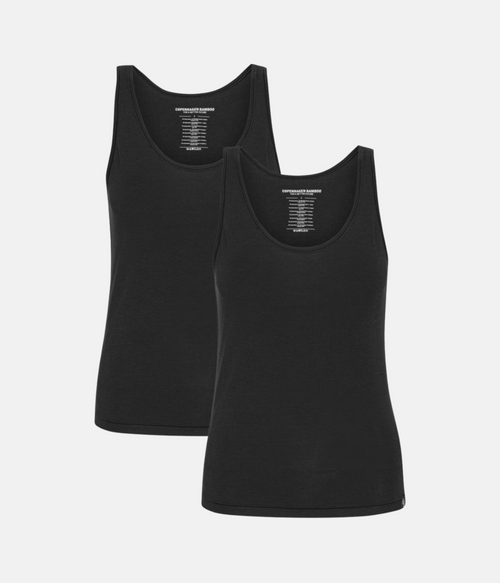
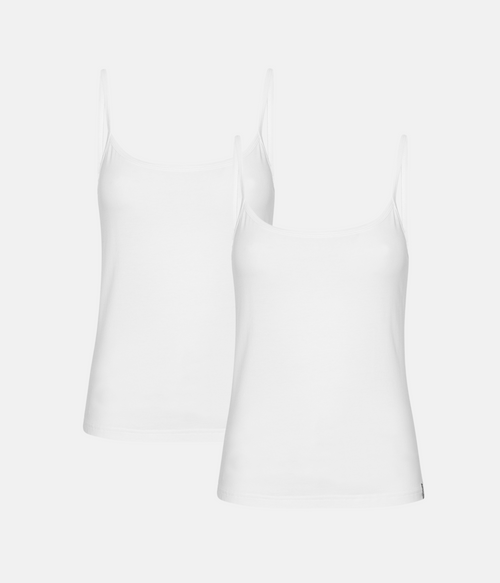
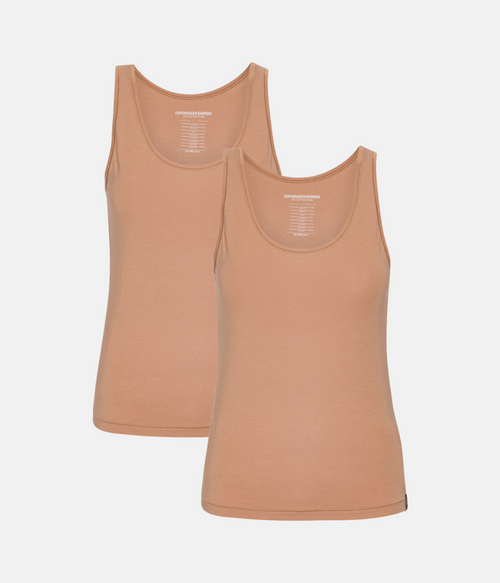
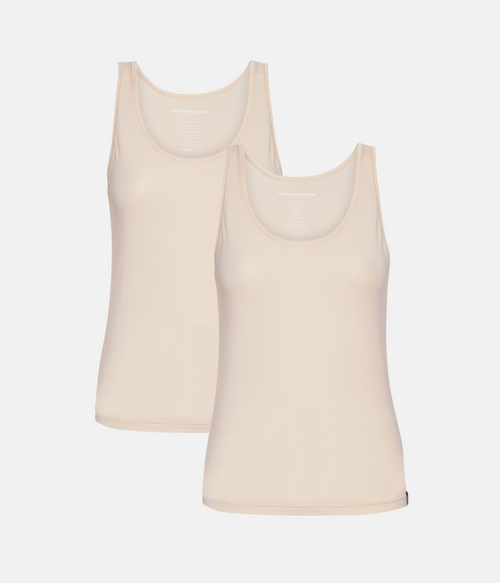
Two yarns of the same weight can consist of a few thick fibres or many thin ones. Many thin fibres give a more supple yarn and a fabric that drapes more softly against the body. The yarn also becomes more even, because each fibre takes up less space. See the qualities in our most popular items.
Fibre length matters too
Thickness is not the only factor. Long fibres leave fewer loose ends on the surface, and fewer ends mean fewer tiny points you can feel on the skin. Viscose is made as long, continuous filaments that can be cut to whatever length the spinner wants. Thin and long fibres together are one reason the fabric feels smooth.
Softness and durability
Very thin fibres are softer, but they also wear faster, because each fibre has less material to give. There is always a trade off between a soft surface and a fabric that lasts for years. A slightly thicker yarn or a denser knit can hold up longer. See the selection in women's bamboo tops.
Why the fabric changes in the wash
The first washes remove residue from production and loosen the fibres slightly, so the fabric often feels even softer. After many washes the thin fibres start to wear, and the fabric gradually becomes thinner. That is not a fault but the natural course for thin fibres. How fast it happens depends largely on washing and drying.
Protect the soft surface
Wash at a low temperature, ideally 30 or 40 degrees, and turn garments inside out so the surface rubs less against the rest of the load. Skip the tumble dryer, which is hardest on thin fibres. Let clothes air dry and leave out fabric softener, which coats the fibres. The fabric then stays soft for many seasons.
Feel it for yourself
You do not need numbers to judge a fabric. Feel whether it gives under your fingers, whether it drapes easily and whether the surface is even. Hold it up to the light and see how densely it is knitted. A fabric that is both soft and dense will usually feel pleasant for a long time.
Frequently asked questions
How is fibre thickness measured
In units describing weight per length, such as denier or dtex. The lower the number, the thinner each fibre, and the softer the fabric usually becomes.
Is softer always better
Not necessarily. A slightly firmer fabric keeps its shape better and wears more slowly, so it depends on whether you value the feel or the lifespan more.
Does the fabric get softer over time
Often yes, during the first many washes, as the fibres loosen a little. After that the fabric slowly becomes thinner instead, especially if it is tumble dried.