From bamboo stem to spinnable mass
Sep 20, 2026
Short answer: Bamboo is harvested, chopped and chemically dissolved into a thick pulp, which is pressed through fine nozzles and hardens into long fibres. It is the same basic process used for all viscose, which is why the label says viscose.
The raw material is a grass
Bamboo is not a tree but a fast growing grass. The stalks are harvested while still fairly fresh, because they are easier to process. The plant grows back from its roots, so the field does not need replanting each time. This raw material sits behind our long sleeve bamboo t-shirt and the rest of the range.
From stalk to small pieces
After harvest, the stalks are cut into smaller pieces and chopped into a coarse mass. The more even the pieces, the easier they are to dissolve evenly in the next step. Think of chopping vegetables for soup: small, equal pieces give a more even result. At this stage the material is simply being prepared for chemical treatment.
Dissolving into a syrupy pulp
The chopped material is dissolved in a chemical liquid until it becomes a thick, syrupy pulp. At this point it looks nothing like a plant. The pulp must be completely smooth, without lumps, or the fibres will be uneven later. This is the step where bamboo turns from a raw material into a made material that can be shaped freely.
Pressed through fine holes
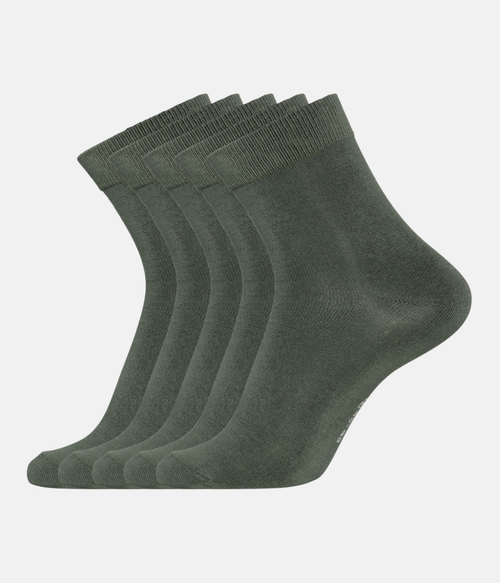
The liquid pulp is then pressed through a plate with many fine holes. The jets run into a bath, where they harden into solid threads. The result is a long, smooth fibre that can be cut to the length the spinner needs. This fibre later becomes yarn for items such as bamboo socks for men and women.
Why the fibre feels so soft
Because the fibre forms in a bath rather than growing in nature, its surface is very smooth and even. It has fewer tiny scales and bumps than many plant fibres. That is one reason bamboo viscose feels soft and cool against the skin. The softness comes from how the fibre is made, not only from the plant itself.
Why it is called viscose
The fibre is made, not natural in a botanical sense. The raw material is bamboo, but the thread itself is created through a chemical process. That is why the label says viscose from bamboo, not just bamboo. The same applies to our bamboo boxers, where the label states what the fibre is and where it comes from.
What it means in everyday use
Viscose is a soft material that likes gentle handling. Wash at a low temperature, use a mild detergent and avoid high heat in the dryer. That way the fibres keep their shape and surface for longer. Dry the garment flat or hang it up. Small washing habits make a real difference to how long your clothes last.
The whole journey at a glance
The journey comes down to four steps: harvest, chopping, dissolving and forming the fibre. Then the fibre is spun into yarn, the yarn is knitted into fabric and the fabric is sewn into clothing. Every step shapes the final result. Knowing how the fibre is made helps explain why the clothes feel the way they do.
Frequently asked questions
Is bamboo viscose a natural material
The raw material is natural, but the fibre is made through a chemical process. That is why it is called viscose rather than a natural fibre, even though it comes from a plant.
How long does the process take
From harvest to finished fibre it usually takes a few days in one continuous plant. Spinning, knitting and sewing follow, and each takes its own time.
Where is bamboo for textiles grown
Mainly in Asia, where the climate allows fast growth all year round. Warmth and moisture help the plant grow back quickly after each harvest.