How to read a size guide
Sep 12, 2026
Short answer: First check whether the numbers are body measurements or garment measurements. Body measurements are compared with your own, and garment measurements with a piece of clothing you own and like.
Body or garment measurements
Body measurements are yours, taken directly on the body. Garment measurements are taken on the finished piece lying flat. The numbers look alike but mean something quite different. A chart with body measurements is easiest, because you only need to measure yourself. Look for it when choosing from the women's range.
How to measure yourself
Use a soft tape measure over underwear or directly on the skin. Measure the chest at its widest point, the waist at its narrowest and the hips at the widest point over the seat. Keep the tape level and close without pulling. Stand relaxed and breathe normally. Write the numbers down.
Compare the right numbers
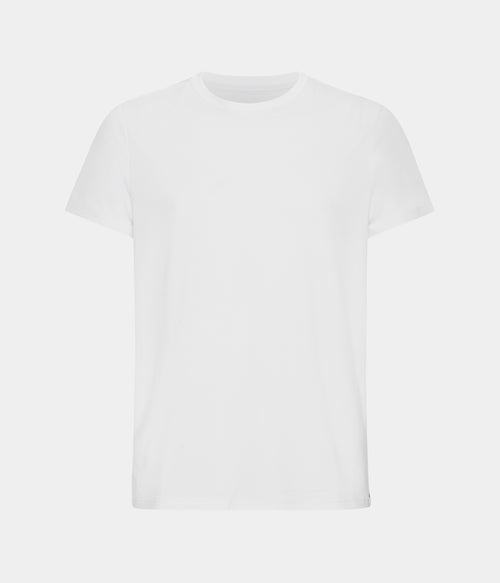
If the chart gives garment measurements, measure a T-shirt you like from seam to seam under the arms and compare. Lay it flat, smooth it out and measure straight across. Remember that a measurement across a flat garment is half the circumference. See the chart for the most popular styles for men.
Be aware of tolerances
There is always a small variation between pieces, because fabric and sewing are never quite identical. One to two centimetres is normal for the most popular styles for women. If your measurement sits right at the border between two sizes, the tolerance can decide which fits better. Then it is worth trying both.
Between two sizes
If you are between two sizes, think about how you will wear the garment. For a close fit as a base layer, the smaller one is often right. For a loose, airy fit, the larger may be better. Also consider which measurement matters most for the style: the chest for a T-shirt, the hips and thighs for trousers.
Stretch changes the picture
Soft fabric with stretch gives, so a garment can fit well even if its measurement is slightly smaller than yours. That applies especially to underwear and tops meant to fit close. Fabric with little stretch needs the measurements right from the start. So read the fabric description as well.
When the chart only has letters
Some charts show only S, M and L without measurements. Then you do not know what the size means, and an M from one brand can be an S from another. The safest option is to try, or to choose a style from a brand you already know. Letters alone say too little.
How often to measure yourself
Your measurements change slowly, so there is no need to measure every time you shop. Once a year is usually enough, or when you notice your clothes fitting differently. Save the numbers on your phone so you have them at hand when choosing a size.
Frequently asked questions
What if the chart only has letters
Then you need to try, or go by a style from a brand you already know. Letters alone say too little about the measurements, and they vary between brands.
How accurate are the charts
Fairly accurate, but with a tolerance of a couple of centimetres per measurement. If you are close to the border between two sizes, it pays to try both.
Do I need to measure myself every time
No. Measurements change slowly. Once a year is plenty, or whenever you notice your clothes starting to fit differently than before.