Socks for long shifts in healthcare
Sep 12, 2026
Short answer: On a twelve hour shift, moisture, pressure and swollen legs are what cause trouble. Choose a sock with good moisture transport, a soft cuff and a little padding under the foot, and bring an extra pair so you can change halfway through.
Moisture transport over thickness
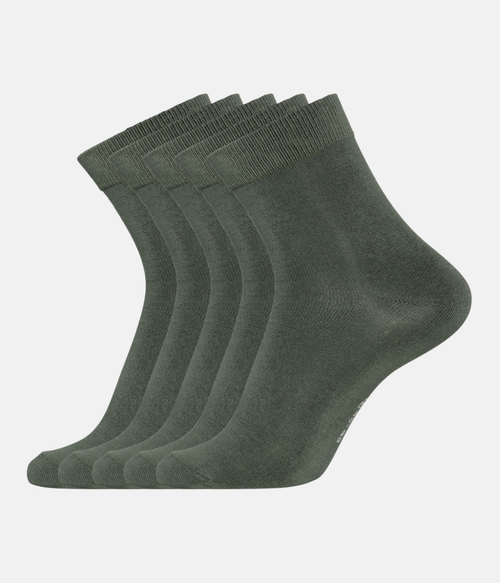
Your feet are in work shoes the whole shift, and moisture builds up in the sock hour by hour. A sock that moves moisture away from the skin keeps the foot more comfortable, even when the shift runs long. That is the main reason to choose bamboo socks for long shifts, when there is rarely time to think about your feet.
Legs swell during the shift
A cuff that felt fine at seven in the morning can feel tight by five in the afternoon. Many people find their legs swell a little over a long day on hard floors. Choose a soft cuff and go up a size if in doubt when you look at socks for men and women. They should not leave deep marks.
Padding on hard floors
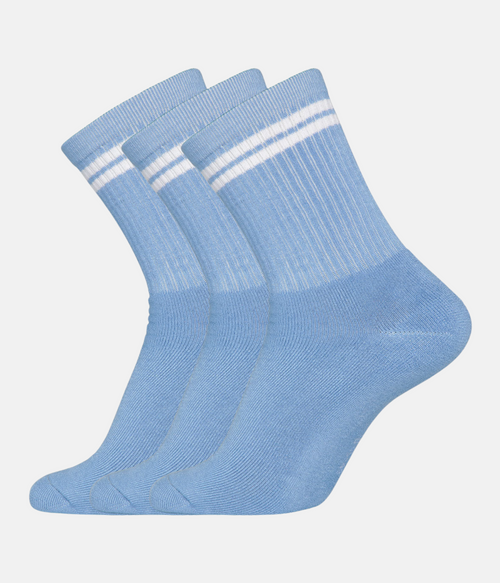
Hospital corridors and care homes often have hard floors, and you feel it in the soles of your feet after many hours. A little padding under the heel and forefoot makes a difference, but too much fabric can make the shoe tight. Choose a sock with light padding that suits the shoes you already wear at work.
A change in the middle of the shift
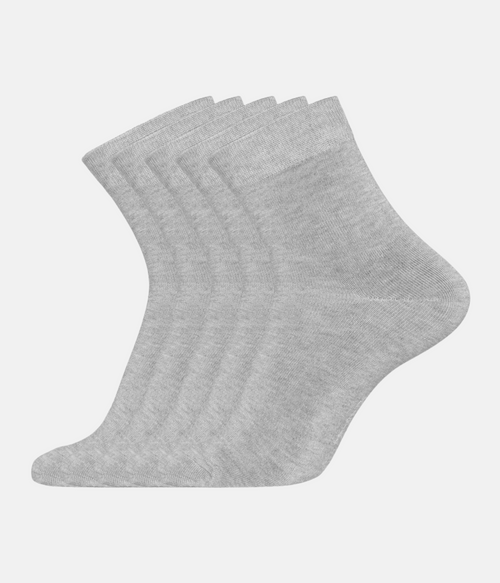
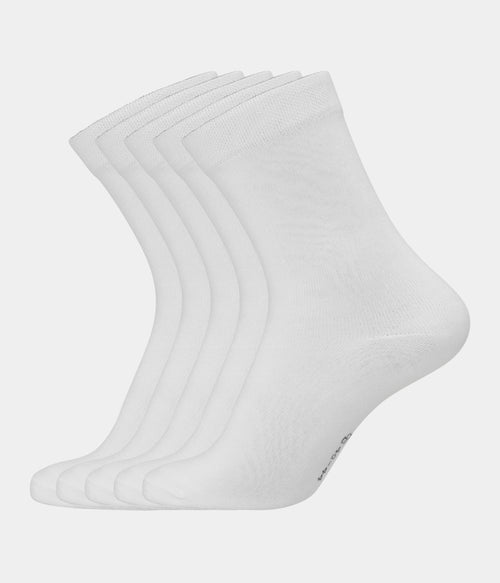
A clean, dry pair after six hours feels like a break. Your feet get some air for a few minutes, and you start the second half of the shift with a dry sock. Keep an extra pair of socks for women or a men's model in your locker, so you do not have to remember it every day.
Fit without folds
A sock that is too big forms folds under the foot and rubs when you walk thousands of steps. One that is too small pulls the heel down. Choose by the size of your work shoes. A smooth sock without a bulky toe seam is less noticeable when you stand and walk for many hours.
The shoes matter too
Even the best sock struggles to keep a foot dry in a shoe that never dries out. If you can, rotate between two pairs of work shoes and let them dry for a day in between. Take the insoles out after your shift. That gives the sock better conditions and your feet an easier day next time.
On compression and health
Ordinary socks are about comfort, not treatment. If you have swollen legs, pain or other discomfort that does not go away after a day off, talk to your doctor. Compression stockings are a question for professional advice and not something an ordinary sock can replace, however soft it is.
A simple routine for shift work
Put on a clean pair before you leave home, and keep an extra pair in your locker at work. Change after six hours and put the used pair in a bag. Wash them at 40 degrees and let them air dry. With enough pairs in the drawer, it becomes a fixed part of every shift.
Frequently asked questions
Are compression stockings better
That is a question for your doctor. Ordinary socks are about comfort rather than treatment, so speak to a professional if your legs bother you after your shifts.
How many pairs should I have
One pair per shift plus three or four extra, so you can change halfway through the day and still have clean pairs when you do not manage to wash during the week.
Does padding under the foot help
Yes, on hard floors. You notice it only after many hours, and it is mainly in the last part of the shift that light padding under the heel and forefoot makes a difference.