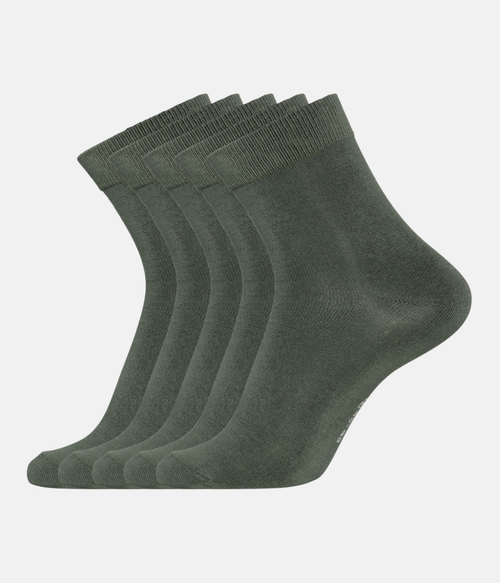
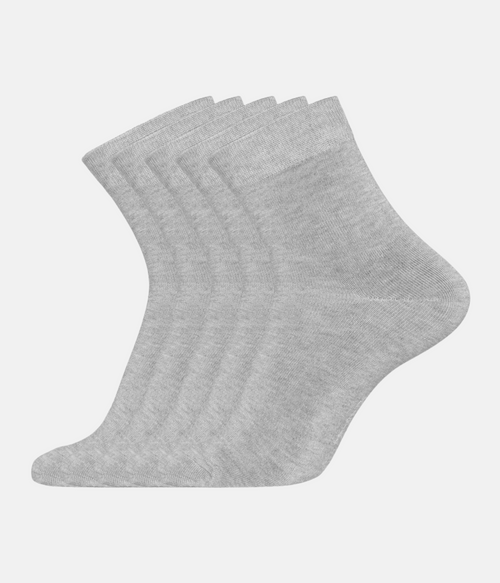
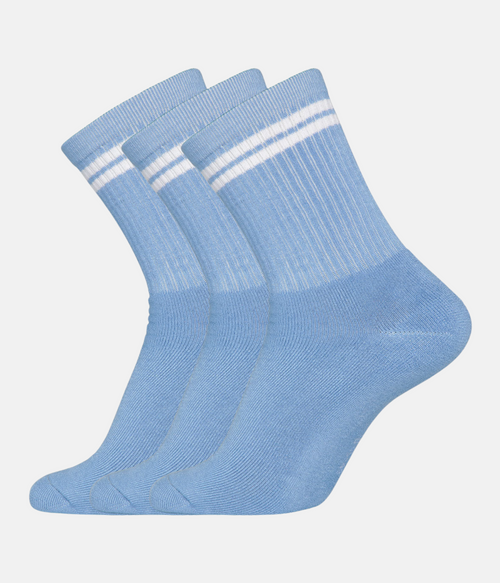
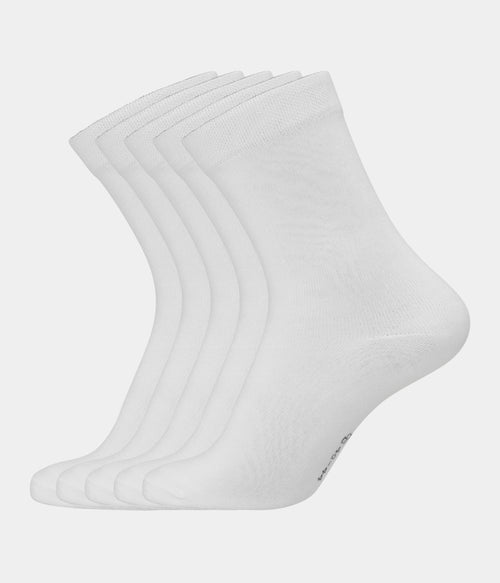
Socks for running, what the material means
Sep 12, 2026
Short answer: When running, moisture and friction decide how comfortable you are. A sock that moves sweat away and fits closely enough not to fold helps prevent blisters better than a thick sock.
Moisture creates the blister
A blister usually forms when damp skin rubs against fabric for a long time. Wet skin softens and tolerates less. That is why moisture transport matters more than cushioning. It is also why bamboo socks for women work well on a run.
What the material does
Cotton soaks up sweat and holds on to it, so the sock becomes heavy and wet. Bamboo viscose spreads the moisture through the fabric, where it can evaporate, and the sock feels drier for longer. Synthetic running socks work in a similar way. The key is to avoid a sock that gets soaked through.
The fit must be close enough
A sock that folds at the heel or over the instep creates a fixed friction point that repeats with every step. Choose the exact size from socks for men and women rather than sizing up. The sock should lie smoothly all the way round.
Choose the length to suit the shoe
With low running shoes an ankle style is best, because it protects against the shoe edge at the back of the heel. With trail shoes that have a high collar, a longer style is better, so the edge does not rub against a bare ankle. Both lengths are available in socks for men.
Thickness by the weather
In warm weather a thin sock is the best choice, because it dries faster and leaves more room in the shoe. In the cold a slightly thicker sock can be more comfortable. Whatever the thickness, moisture transport is what matters most for comfort along the way.
The running shoe must suit the sock
Try running shoes on with the type of sock you run in. A thick sock can make a shoe too tight, and a thin one can make it too loose. Both lead to more movement and friction. If you are unsure, bring your running socks when you try on new shoes.
New socks before a long run
Never wear a brand new pair of socks for the first time on a long run. Do a few short runs in them first so you know how they fit. The same goes for new shoes. Small changes can create friction points that only show up after many kilometres.
Change after every run
A sock that has been used for running is damp and full of salt from sweat. If it is dried on the radiator and worn again, it becomes stiff and rubs more next time. Wash it after every run at 40 degrees and let it air dry, so it keeps its softness.
Mind your nails
Long toenails press against the toe of the shoe, especially when running downhill. That can lead to sore toes and holes in the sock. Keep your nails short and filed before longer runs. It spares both toes and socks and makes the run more comfortable.
When blisters keep coming
If you get blisters even though sock and shoe fit, it may be down to your running style or the shape of your foot. A running shop can look at your gait and suggest a different shoe. If you have sores that do not heal, or other problems with your feet, talk to your doctor.
Frequently asked questions
Are thin or thick socks best for running
Thin in warm weather and slightly thicker in the cold. Moisture transport matters more than thickness, so choose a sock that keeps the foot dry, whatever thickness you prefer.
Should I change socks after every run
Yes. A damp sock dried on a radiator becomes stiff and rubs more next time. Wash it after every run and let it air dry, so it stays soft.
Do two pairs of thin socks help
Some runners use this against blisters, because the friction happens between the two layers instead of against the skin. It does require the shoe to have room for both pairs.