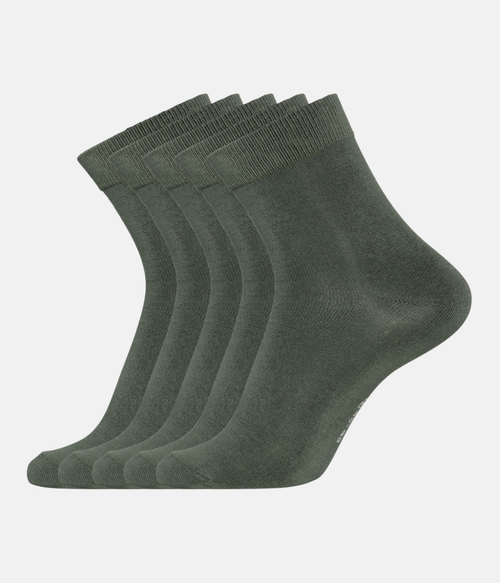
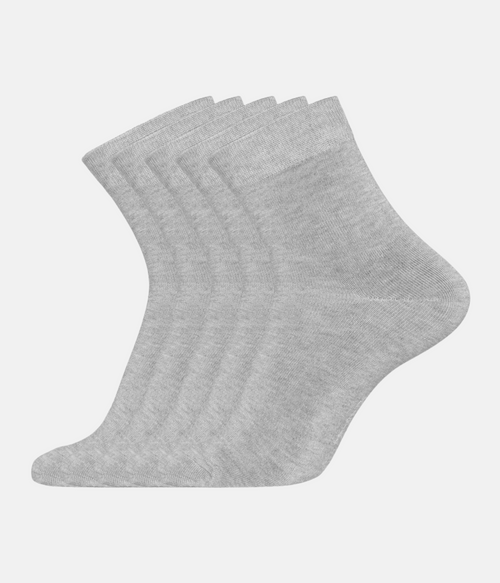
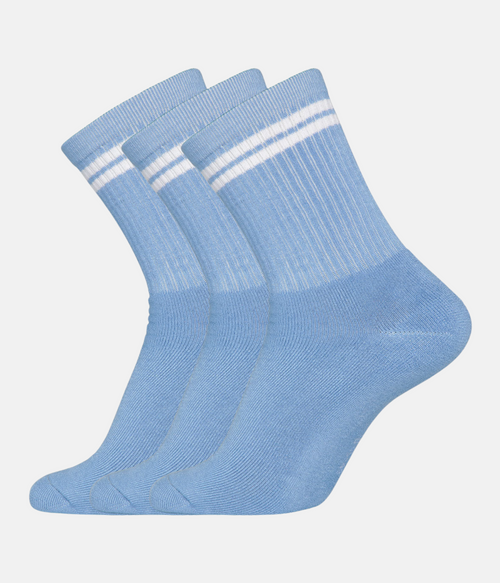
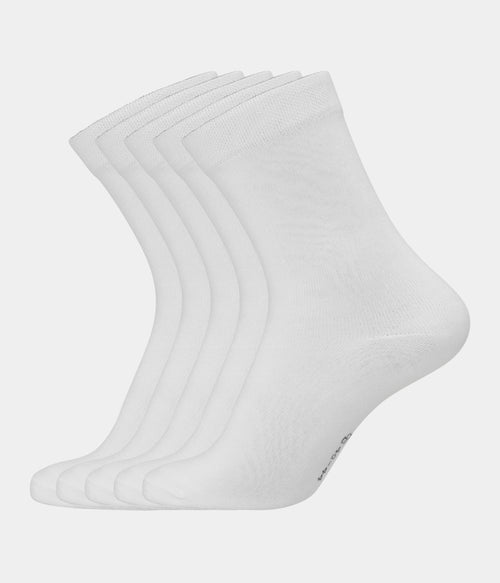
Socks that do not show in the shoe
Sep 12, 2026
Short answer: Choose a footie if the sock must not show at all, and a low cut if it may peek out a little at the back. Which one suits you depends mostly on how high the edge of the shoe is.
Measure the edge of the shoe by eye
Hold the sock up against the shoe first. If the back of the shoe is high, a low cut works fine without showing, because the edge covers the fabric. If it is low, as on ballet flats and loafers, you need a footie from bamboo socks, or the fabric will show at the heel.
Footies for the lowest shoes
A footie sits below the edge of the shoe all the way round, so it stays hidden, even when you sit with your legs crossed. The size has to be exact, though, because a footie that is too big slides down under the heel during the day. See the models in socks for women, where most of the low styles are.
Low cut when a little may show
A low cut covers the whole heel and reaches slightly above the edge of the shoe at the back. That gives more grip and a small glimpse of fabric that most people never notice. Many prefer it because it stays in place all day. It is also available in socks for men.
Why the heel is the weak point
The heel decides whether a low sock stays in place. With every step the heel lifts slightly inside the shoe, and friction pulls the fabric downwards. A sock that only just covers the heel loses its grip first. That is why the fit around the heel matters more than the length.
The type of shoe decides
Ballet flats, loafers and low sneakers with a deep opening almost always need a footie. Regular sneakers and most running shoes have a back high enough for a low cut to disappear behind it. Ankle boots and lace up dress shoes hide both.
The size has to be right
A low sock has less fabric to hold on with than a long one, so there is no room for guessing the size. If you are between two sizes, most people choose the smaller one for footies, because a snug fit stays in place better. For a low cut, the larger size often works.
Colour makes the sock less visible
When a sock peeks out, it is the colour that gives it away. A colour close to the lining of the shoe or to your skin tone makes the fabric hard to spot, even when a little shows at the heel. Black in dark shoes and a light tone in light shoes is the simplest rule.
Moisture and comfort in low shoes
Many people wear low shoes barefoot in summer, but then the moisture stays in the shoe. A thin sock absorbs some of it and can make the shoe more comfortable to wear all day. At the same time the lining wears less, and the shoe keeps looking good for longer.
Wash low socks gently
Wash them at 40 degrees in a laundry bag and let them air dry instead of using the tumble dryer. That way the elastic at the edge lasts longer, and that elastic is exactly what keeps a low sock on your heel all day.
Keep both in the drawer
Most people need both styles, because the shoes in the cupboard are different. A pair of footies for low shoes and a pair of low cut socks for sneakers cover most of the year. Buy them in the same colour, so a matching pair is always easy to find.
Frequently asked questions
Which style slips the least
The low cut slips the least, because it covers the heel completely. It is the heel that pushes a footie down as it lifts inside the shoe with every single step you take.
Can you tell the difference in colour
Yes, clearly. Choose a colour close to the lining of the shoe or to your skin tone, and the fabric shows far less if the sock peeks out a little at the heel.
Are footies warmer than bare feet
No, usually not. They absorb moisture that would otherwise stay in the shoe, and for most people that feels cooler and more comfortable than going completely barefoot.