What is rib knit
Sep 12, 2026
Short answer: Rib knit is vertical ridges formed by alternating knit and purl stitches. It gives a fabric that stretches a lot across its width and pulls back together again. That is why you find rib wherever clothes need to give and still stay in place.
Ridges that give stretch
The switch between knit and purl makes the fabric fold like an accordion. The knit stitches stand out, the purl stitches sit back, and vertical ridges appear. When you pull the fabric, the ridges open out, and when you let go, they close up again. That ability to give and recover matters in socks for women.
Why rib is used at edges
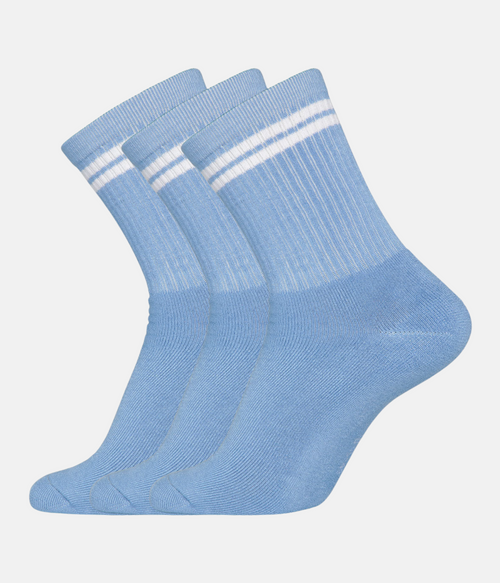
Necklines, cuffs and sock tops are often made in rib, because they need to stretch and pull back. A neckline has to get over your head and then lie flat. A sock top has to pull up and then stay put without pinching. Rib handles both, which is why you find it in almost all bamboo socks.
Rib keeps its shape
A rib knit with a little elastane returns to its starting point, even after many hours of wear. The ridges act like small springs, and the elastane helps them close up again. That means a rib edge does not go slack as quickly as a flat edge. See socks for men and women, where the cuff has to hold all day.
1x1 and 2x2 rib
The numbers tell you how many stitches alternate. In 1x1 rib, one knit and one purl stitch take turns, giving a fine, tight ridge. In 2x2 rib it is two and two, giving a wider and more visible ridge. The fine rib looks discreet, while the wider one gives the garment a more distinct look.
Rib as the whole fabric
Rib is not only used at the edges. Sometimes the whole fabric is knitted in rib, for example in close fitting tops and vests. The fabric then follows the body closely without feeling tight, and it gives when you move. Rib also has a clear texture that adds a little life to a garment without any pattern or print.
Rib compared with single jersey
Single jersey is smooth and stretches mostly across, but it does not spring back quite as well. Rib stretches even more across and pulls back better. On the other hand, rib is thicker and uses more yarn. That is why single jersey is often used for the body of a T-shirt, while the neckline is made in rib.
Caring for rib knit
Rib keeps its shape best when it is not exposed to high heat. Wash at a low temperature, turn the garment inside out and skip the tumble dryer, which can weaken the elastane over time. Let it dry flat or on a line, and ease it into shape while it is wet. That way the ridges keep their spring for a long time.
What to look for
When you choose clothes or socks with rib, pull gently at the edge and let go. A good rib springs back quickly and lies flat without rippling. Also check that the ridges are even all the way round. A rib that fits well from the start usually keeps doing so if you look after it.
Frequently asked questions
What is rib knit
A knit with alternating knit and purl stitches that forms vertical ridges and gives the fabric a lot of stretch across its width, so it can stretch and pull back.
Why is rib used for necklines
Because it can stretch when your head goes through and then pull back afterwards without going slack, so the edge lies neatly all day.
What do 1x1 and 2x2 rib mean
The numbers tell you how many stitches alternate. 1x1 gives a fine ridge, while 2x2 gives a wider and more visible one with a more distinct look.