What it means when socks pill
Sep 12, 2026
Short answer: Pilling is small balls of loose fibres that settle on the surface of a sock. It is a sign of friction and not of poor quality, and the balls can be removed in a few minutes, so the sock can go on being worn for a long time.
How pilling starts
Friction is the whole explanation. Every time your foot moves in the shoe, the fabric rubs against the sole, the inside of the shoe and your trousers. The outer fibre ends are pulled slightly out of the yarn, and the movement rolls them together with neighbouring fibres. The more friction, the more pills. That is why they often show up after a few weeks in shoes you wear a lot.
Where on the sock it happens
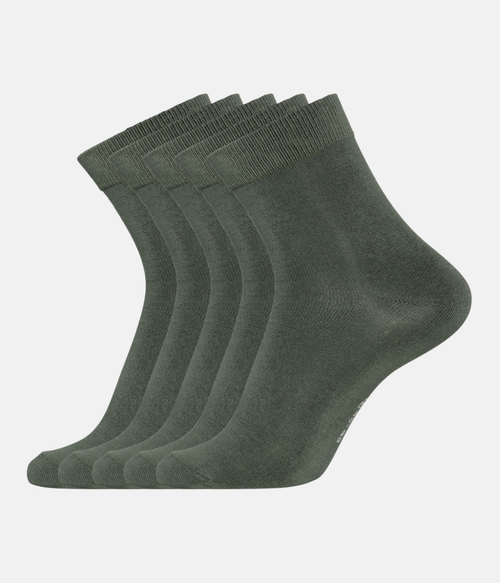
Pills form mostly under the foot and on top of the toes, because that is where the pressure from the shoe is greatest. The heel and the part of the leg that rests against the trouser leg can also be affected. If you look at a pair of bamboo socks after a few months, you will see a pattern that matches your shoes and the way you walk.
Remove the pills instead of throwing socks out
A sock with pills is not worn out. As long as there are no holes in the heel or toe and the cuff still holds, it can be worn for many more months. It is cheaper and more sensible to remove the pills than to buy new ones. Treat these pairs the same way as the rest of your socks and keep wearing them.
Use the right tool
An electric fabric shaver takes the pills off in a minute. If you do not have one, a blunt comb or a clean disposable razor will do, as long as you draw it lightly across the fabric. Lay the sock flat on a table, stretch it slightly and work in one direction. Avoid pulling the pills off with your fingers, as that only drags new fibres out.
Wash socks inside out
In the washing machine, clothes rub against the drum and against each other, and that creates new pills. If you turn your socks inside out, the inside takes the friction and the outside stays neater. Wash at 40 degrees with a mild detergent, and do not fill the drum completely, so the laundry has room to move without being pressed together.
Skip the tumble dryer
The tumble dryer is hard on fibres. The heat makes them brittle, and the constant tumbling rubs loose ends out of the yarn. Air drying on a rack gives fewer pills and also spares the elastic in the cuff. Hang the socks by the toe or lay them flat so they are not pulled out of shape. They are usually dry by the next morning.
Watch out for Velcro and rough fabrics
Velcro on jackets, sportswear and bags catches on the knit and pulls fibres out. Rough fabrics such as denim and fleece do the same when they are washed with thin socks. Close Velcro fastenings before washing, or wash your socks separately in a laundry bag. This also applies to socks for women, where the fabric is often a little thinner.
Frequently asked questions
Is pilling a sign of poor quality
No. Pilling is a sign of friction. Even expensive socks pill where the shoe presses, and it says more about your shoes and the way you walk than about the sock itself.
Can pilling come back
Yes, but usually less after the first few washes, once the loose fibres are gone. Washing inside out and air drying keep the amount down over time without extra effort.
Does pilling make the sock worse
No. It works the same way, and the sock still warms, fits and moves moisture as before. Only the surface looks worn until the pills have been removed with a shaver.