Why you sweat more in synthetic clothes
Sep 12, 2026
Short answer: Because synthetic fibres do not absorb moisture. Sweat stays between skin and fabric instead of moving away, and the body responds by sweating more. You notice it most in clothes that sit close to the skin for many hours.
The moisture stays put
Polyester and nylon move moisture along the fibre but do not absorb it into the fibre itself. With a little moisture, that works fine. With a lot, the fabric cannot move it all, and it collects against the skin. That is the clammy feeling many know from a synthetic top. See the alternatives in men's bamboo joggers.
The body tries to cool down
Sweat only cools when it evaporates from the skin. If it stays as a damp layer between skin and fabric, it cannot evaporate properly. The body registers that it is still warm and keeps producing more sweat. The result is that you feel clammier, even though you are no warmer than before.
Cellulose fibres absorb first
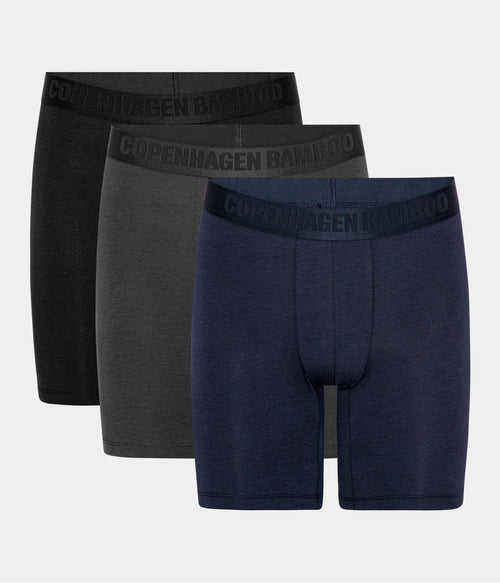
Bamboo viscose is a cellulose fibre, and it behaves differently. It absorbs moisture into the fibre and releases it to the air afterwards. That keeps the skin drier along the way, because sweat does not sit on the surface as a layer. You notice it most in close fitting clothes, see bamboo underwear for men.
The inner layer matters most
How much you notice the difference depends on how close the clothes sit. Underwear and T-shirts lie directly on the skin for many hours, and this is where the material makes the biggest difference. A loose jacket on the outside matters less, because it does not touch the skin. Start with the inner layer.
Synthetic is not always worse
Synthetic fabrics have their strengths. For hard training they dry fastest, and they are strong and hold their shape. When you run or cycle hard for a short time, those are exactly the qualities that count. For everyday wear, when you have the clothes on for many hours, comfort is better in cellulose.
Why sportswear uses polyester
Sportswear is made for short periods of heavy sweating. Polyester dries quickly and handles many washes, which suits high intensity for a short time. You change after training, so it matters less that the fabric does not absorb moisture. A full working day is a different situation.
Blends combine the qualities
Many fabrics blend cellulose with synthetic fibres. It is often done to combine quick drying and strength with comfort against the skin. A blend can be a good compromise, especially for clothes used both for activity and everyday life. Browse all men's clothing for the full range.
Choose by what the day brings
It is not about picking one material for everything. For training and short, intense sessions, synthetic is a sensible choice. For everyday life, work and quiet days, a fabric that absorbs moisture gives a drier feel over many hours. Look at how you use your clothes and choose the material to match.
Frequently asked questions
Is synthetic always worse
No. For hard training it dries fastest. For everyday wear, when you have the clothes on for many hours, comfort is better in cellulose.
Why is polyester used in sportswear then
Because it dries quickly and is strong. It suits high intensity for a short time, after which you change anyway.
Can you mix the two
Yes, and it is often done to combine quick drying with comfort. A blend can be a good choice for clothes you wear for both activity and everyday life.