Bamboo viscose against lyocell
Sep 12, 2026
Short answer: Lyocell and bamboo viscose are both made from plant cells and belong to the regenerated fibres. Lyocell is slightly stronger when wet, while bamboo viscose lies softer against the skin. Which you prefer depends mostly on how close to the body the garment sits.
Two fibres with the same starting point
Lyocell and bamboo viscose both start as plant pulp, where the cellulose is dissolved and pressed out as new, long threads. Lyocell is usually made from eucalyptus with a different solvent than viscose. Bamboo viscose is made from bamboo. Both give a smooth, even thread, but the fabrics behave a little differently in use.
Strength when wet
The clearest difference shows in the wash. Lyocell keeps its strength better when the fibres are wet, while bamboo viscose needs slightly gentler handling. That does not make it fragile, only that it benefits from a delicate programme. Garments you wash often, such as a long sleeve bamboo T-shirt, last longest this way.
What strength means over time
You rarely notice the difference in strength during the first weeks. It appears after many washes, when a fabric that is more stressed while wet can slowly lose a little shape. With gentle washing, low temperatures and drying on a hanger, bamboo viscose stays neat for a long time. It is more about habits than the fibre.
The surface against the skin
Bamboo viscose feels cooler and smoother in the first seconds after it touches the skin. You notice it most in clothes that sit close to the body all day. Lyocell is smooth too, but many find bamboo viscose a touch softer. For a bra that lies against the skin from morning to night, that matters, see bamboo bra.
Where the difference matters
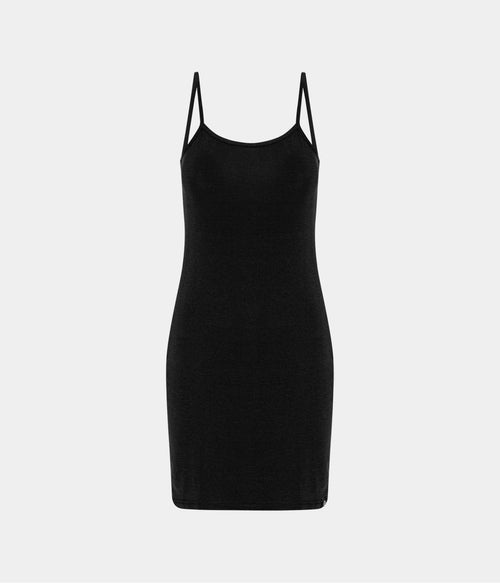
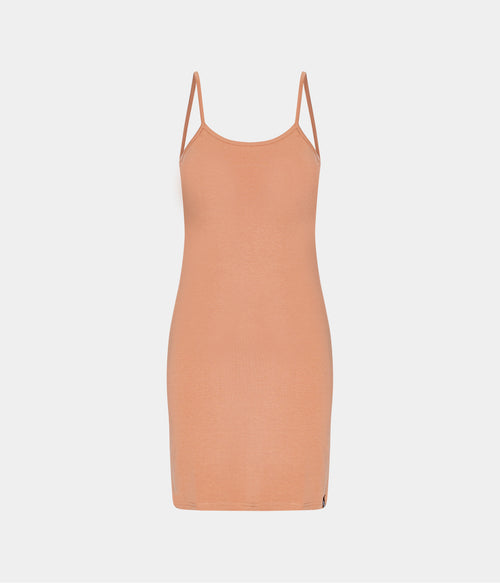
On an outer layer such as a jacket or shirt, the difference is small, because there is a layer in between. On a layer directly against the skin, you feel it every day. A slip is a good example, since it lies on the skin and should glide easily under a dress, see bamboo slips.
Drape and fit
Bamboo viscose drapes softly and closely and follows your shape. Lyocell often has a little more structure, which suits clothes with a firmer form. For close fitting everyday wear, the close drape is an advantage, as the fabric does not stand away from the body. For outer layers, more structure can be nice. Choose by purpose.
Washing and care
Wash both fibres on a delicate programme and turn the garment inside out. Bamboo viscose especially benefits from a low spin, since the fibres are most vulnerable while wet. Avoid the tumble dryer on high heat and dry the pieces on a hanger or flat. That way colour, shape and the soft surface last longer.
How to choose
If the garment sits close to the skin all day, most people prefer bamboo viscose for its smooth, cool surface. If a piece must handle many hard washes or needs more structure, lyocell can be a good choice. There is no single right answer. Feel the fabric and think about where and how often you wear it.
Frequently asked questions
What is lyocell
A regenerated cellulose fibre like bamboo viscose, just made with a different solvent and usually from eucalyptus. The thread becomes smooth and even, much like viscose.
Which fabric is strongest
Lyocell is slightly stronger when wet. The difference shows mostly after many washes, and gentle washing reduces it for bamboo viscose.
What feels best against the skin
Bamboo viscose for most people. It is smoother and feels cooler the moment it touches the skin, and you notice that difference every single morning you get dressed.