How to avoid holes in a T-shirt at the stomach
Sep 12, 2026
Short answer: Small holes at the front near the stomach are almost always caused by friction against a belt buckle, a desk edge or the zip on your trousers. It is about wear in one specific spot, not poor fabric, and there is a lot you can do to reduce it.
The belt buckle is the main suspect
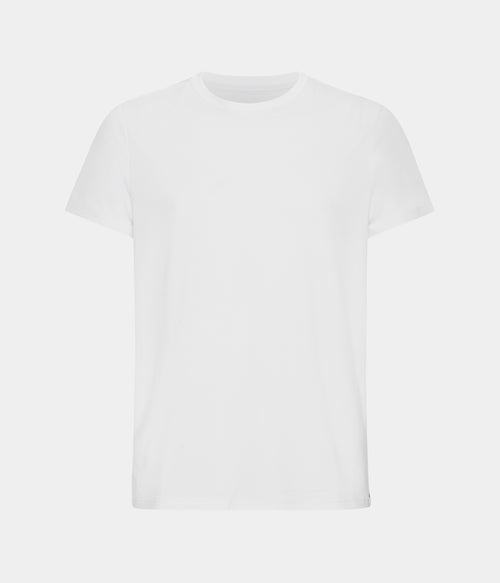
With every step and every time you sit down, the fabric rubs against the edge of the buckle. That edge is often sharp or rough, and it hits exactly the same spot day after day. After a few months the fabric wears thin right there, and the first small holes appear. This applies to all T-shirts, including knits like the bamboo tank top for men.
The desk edge does the rest
If you sit for hours at a desk or kitchen table, your stomach often leans lightly against the edge. Every small movement creates friction, especially if the tabletop has a sharp metal or wooden edge. Change your sitting position during the day, move your chair back a little, or put something soft along the edge. See the heavier qualities among the most popular pieces from Copenhagen Bamboo.
The zip and the button
Trousers with a metal button and zip have small edges sitting right under your T-shirt. When you bend over or slouch, the fabric is pressed against them. Jeans with a chunky button in particular can wear a small hole in a few months. Check whether the button has sharp edges, and choose trousers with a flat closure on days when you sit a lot.
Heavier fabric lasts longer
A heavier fabric has more fibres per square centimetre, so it tolerates more friction before it wears thin. A light T-shirt feels airy in summer, but it gives way faster where it rubs. If you often wear a belt, a slightly sturdier quality for everyday use is worth it. See the qualities in the men's range.
Tuck your T-shirt in
When your T-shirt is tucked into your trousers, the fabric lies under the belt and not on top of the buckle. The waistband then takes the friction instead of the thin knit. It is one of the simplest ways to prevent holes. If you do not like the look, a tank top under the T-shirt adds an extra layer that takes the wear.
Choose a softer buckle
Buckles with sharp corners, rough casting or large logos wear fabric the most. A flat buckle with rounded edges is far gentler. You can also test it with your finger: if the edge feels sharp against your skin, it is also hard on a T-shirt. A fabric or elastic belt without a metal buckle is the gentlest choice for long days at a desk.
Washing and drying matter too
Worn fibres become weaker with rough treatment in the wash. Wash at 30 or 40 degrees with a mild detergent, and turn the T-shirt inside out so it does not rub against zips and buttons in the drum. Avoid the tumble dryer, as heat makes fibres brittle over time. Air drying is the gentlest option and gives the exposed areas a longer life.
What to do once a hole appears
Small holes can be sewn up with fine thread in the same colour. Sew from the inside and do not pull the thread too tight, or the fabric will pucker. It shows a little, but the T-shirt can still be worn at home or under a jumper. When more holes appear, it is time for a new one, and worth looking at what caused the wear.
Frequently asked questions
Are small holes a sign of poor quality
No. It is the classic wear spot at the stomach, and it affects all T-shirts regardless of price, because the friction happens in the same place every day.
Can it be prevented
Yes. A softer buckle, a tucked-in T-shirt and gentle washing noticeably reduce friction and help the T-shirt last longer.
Can the holes be mended
Small holes can be sewn from the inside with fine thread. It shows a little, but the T-shirt can still be worn at home or as a base layer.