T-shirts and sweat odour, what the material does
Sep 12, 2026
Short answer: The material cannot stop sweat, but it can move the moisture away from your skin. A dry fabric gives bacteria poorer conditions, so odour develops more slowly over the day.
Moisture is what makes odour
Sweat does not smell on its own. The odour comes from bacteria on the skin breaking the sweat down, and that happens best in moisture and warmth. So a fabric that absorbs moisture and dries quickly makes a noticeable difference. The shorter the time the fabric stays wet, the less time odour has. See the qualities in bamboo sweatwear.
Synthetic fabrics hold on to odour
Polyester absorbs hardly any moisture. The sweat stays on the skin, and bacteria settle in the fibres and remain even after washing. Many know this from sportswear that smells as soon as it warms up again. Natural fibres release odour more easily in the wash. See the qualities in women's bestsellers.
What bamboo viscose does
Bamboo viscose absorbs moisture from the skin and spreads it through the fabric so it can evaporate. It feels drier against the body than a synthetic fabric. It does not stop sweat and does not remove odour completely, but it can give bacteria poorer conditions over a long day. Washing and airing still matter most.
Fit plays a part
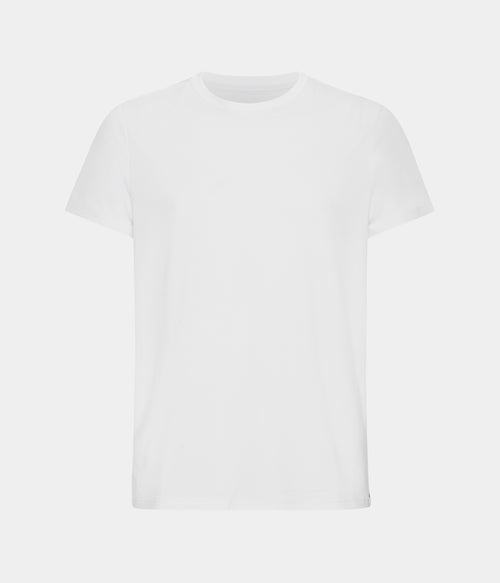
A T-shirt that is very tight under the arms gets no air, and the moisture lingers. A fit with a little room lets air circulate, so the fabric dries faster. This matters most on warm days and under an outer layer. Choose a style that sits lightly if you sweat a lot. See the styles in the men's range.
Washing and airing
Wash at 40 degrees with a full dose of detergent, and air the T-shirt between wears. A T-shirt that hangs to air for a few hours smells less when it goes in the wash. Never put damp clothes in a closed basket, as the moisture gives bacteria good conditions. Turn it inside out so the water reaches the side against your skin.
Skip fabric softener
Fabric softener leaves a coating on the fibres that can hold on to bacteria and odour. The coating also makes the fabric worse at absorbing moisture. If a T-shirt smells even after washing, try an extra rinse and no softener. A splash of vinegar in the softener drawer can also help lift residue out of the fabric.
Deodorant and yellow marks
Deodorant can build up in the fabric under the arms and cause yellow marks and a lasting odour over time. Let your deodorant dry before you put the T-shirt on. Treat the underarm area with a little washing up liquid before washing if there is residue. That way the T-shirt stays fresh and neat for longer.
When the odour changes
Strong sweat odour can have many causes, such as heat, stress, diet or exercise. Clothing can only help with the part that is about moisture and fabric. If you notice the odour changing suddenly, or that you sweat much more than before, talk to your doctor. That is not something a material can solve alone.
Frequently asked questions
Why does my T-shirt smell after washing
Bacteria are stuck in the fibres. An extra rinse and no fabric softener often help, and airing it before washing also makes a difference.
Does washing at 60 degrees help
It kills more bacteria, but it wears the fabric and the colour. Try 40 degrees with a full dose first, and always check the care label.
Can odour stay in the fabric for good
In synthetic fabrics it can. In bamboo viscose and cotton it is less common, because the fibres release odour more easily in the wash.