Shrinkage and fit, what to expect
Sep 12, 2026
Short answer: Expect two to four percent in length at 40 degrees if the fabric is not pre-shrunk. That is one to two centimetres on a T-shirt. If the fabric is pre-shrunk, the change is so small that you will hardly notice it in daily wear.
Shrinking happens mostly in length
Knitted fabrics contract mostly lengthwise. When the fibres get wet and warm, they relax and settle into a shorter form. The width changes only a little, since the knit already gives across. So keep an eye on the length of sleeves and body. This applies to all styles in men's most popular.
What pre-shrunk means
A pre-shrunk fabric has been washed or treated before the garment was sewn. The shrinking that would otherwise happen in your first wash has already taken place. That means the size on the label is the size the garment keeps after washing. If nothing is stated, it is wise to expect a little shrinking in length.
The first wash matters most
If the fabric is not pre-shrunk, most of the shrinking happens the first time it is washed. After that the size is stable, and later washes change very little. This also applies to the women's range. Measure a T-shirt before and after the first wash if you want to know exactly how much it has changed.
How to keep it to a minimum
Wash at 40 degrees and let the garment air dry. That keeps shrinking to a minimum for the items in women's most popular. Heat is the main reason fibres contract, and a tumble dryer adds heat and movement at once. Hang garments up or lay them flat, and they dry in the shape they have.
Pull it into shape while wet
When a garment comes out of the machine, give it a gentle pull lengthwise before it goes up to dry. Carefully pull the body and sleeves and straighten the seams. It takes half a minute and helps the garment dry at the right length. Avoid wringing it hard, since that twists the seams.
What it means for the fit
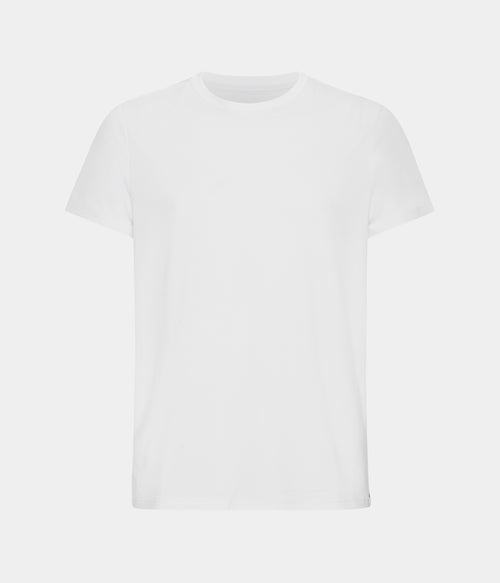
One to two centimetres in length is not much on a T-shirt, but you notice it if the garment is already short on you. The width stays the same, so the fit across chest and shoulders does not change. If you like a long T-shirt, length is what to look at when choosing a size.
Sweat and thick fabrics
Thicker fabrics like sweat contain more material, so there is more to contract. The difference is small, but it is there. Treat sweatwear the same way as T-shirts, at 40 degrees and air dried, and lay it flat to dry so the weight of the wet fabric does not pull it out of shape.
When you can rely on the size
After the first few washes, the size is stable. That is the size the garment will have from then on, as long as you wash the same way. If you switch to a hotter wash or start using a tumble dryer, a little extra shrinking can follow. Stick to the same habit and the size stays put.
Frequently asked questions
Should you buy a size up to be safe
No, if the fabric is pre-shrunk. Then the garment is simply too big. If it is not pre-shrunk, the change in length is so small that your normal size usually still fits.
Can you stretch a shrunk piece back
Partly. Pull it into shape while wet and let it dry flat. You rarely get the full length back, but you can often recover some of it.
Does sweat shrink more than T-shirts
A little, because the fabric is thicker and contains more material to contract. At 40 degrees with air drying, the difference is so small that it rarely changes the fit.