Socks for safety shoes
Sep 12, 2026
Short answer: Safety shoes are heavy, stiff and fully closed. The sock has to cushion against the hard edges and move moisture away from the foot, which asks more of it than an ordinary shoe does.
Why safety shoes are different
Safety shoes protect the foot from heavy objects, sharp things and falls. That takes stiff materials, a firm sole and often a reinforced toe cap. It makes them safe, but also hard and closed. Your foot stands all day in a space with no air and firm edges. That is why the sock plays a bigger role here than in almost any other shoe.
A stiff shoe needs cushioning
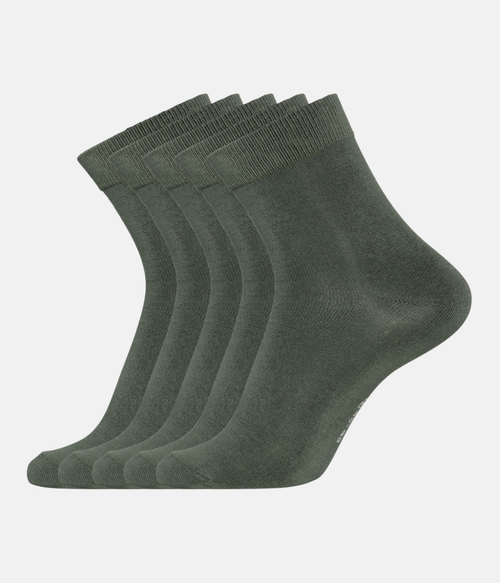
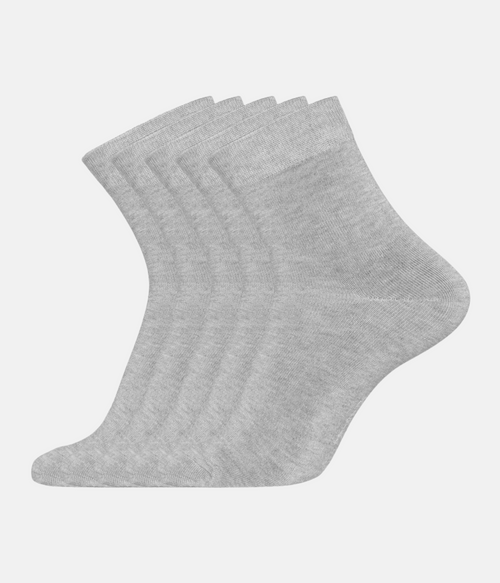
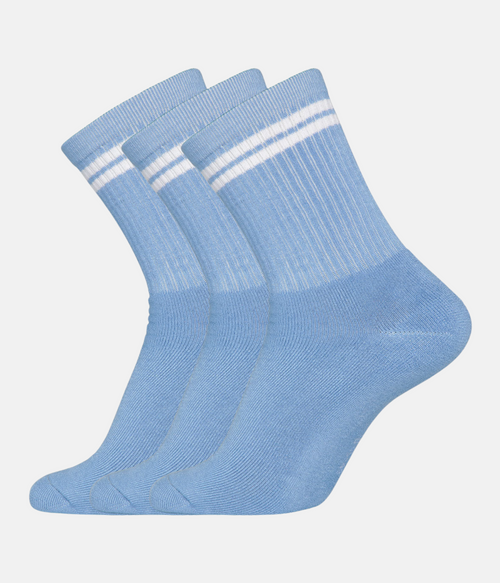
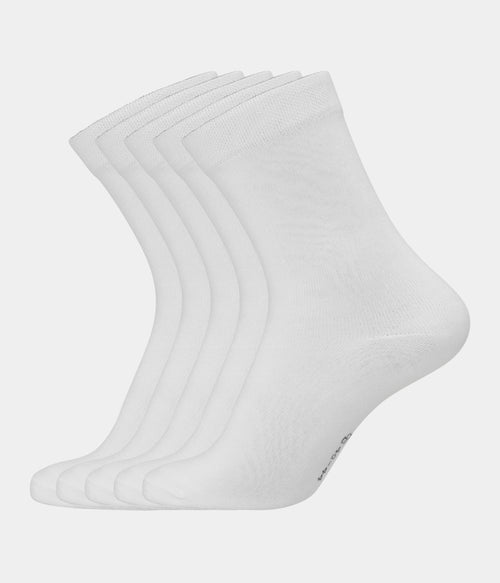
A steel toe cap and a stiff sole create hard edges that the sock has to soften. Without cushioning, the shoe presses directly on toes and heel, and you feel it within a few hours. A sock with cushioning under the foot spreads the pressure. See bamboo socks for men and women. Choose a thickness that suits the shoe.
No air at all
Safety shoes are closed all the way round, and moisture can only leave through the sock. Heavy materials hold heat, and the foot sweats more than in a light shoe. A sock that absorbs moisture keeps the skin drier. The same applies higher up, where a thin layer under workwear helps. See bamboo tank top for men.
The leg must clear the edge
The edge of a safety shoe sits high and rubs if the sock leg is too short. Since the shoe is stiff, the edge does not give, and the skin takes all the pressure. A leg that reaches well above the edge protects the ankle all day. A close fitting base layer feels good in the same way. See bamboo t-shirts for men.
Reinforced heel and toe
In safety shoes, socks wear out faster than in ordinary shoes. The hard toe cap and firm heel counter rub against the fabric with every step. A sock reinforced at heel and toe lasts longer and keeps its cushioning. Check your socks regularly and replace them when the heel gets thin, before a hole appears.
The right size
Safety shoes do not give, so the sock must fit precisely. A sock that is too big folds at the toes, where the cap already presses. One that is too small pulls tight and drags the heel down. Try the shoe on with the socks you actually wear at work, so you know the fit lasts all day.
How many pairs you need
If you wear safety shoes daily, ten pairs is a good starting point. They wear faster than ordinary socks, and you should be able to change every day and ideally at midday. That way the laundry keeps up and you always have a dry pair ready. A spare pair in your bag saves long shifts.
Let the shoe dry
A safety shoe dries slowly because the materials are thick. Take out the insole in the evening and leave the shoe somewhere airy. If you have two pairs, alternate so each pair gets a day to dry. A dry shoe in the morning makes it much easier for the sock to keep your foot dry and comfortable.
Frequently asked questions
Which socks for safety shoes
A pair with cushioning under the foot, a reinforced heel and toe, and a leg that goes above the edge of the shoe. The fit must be precise so the sock does not fold at the toe cap.
Why do feet get so warm in safety shoes
Because the shoe is fully closed and made from heavy materials. There is no air flow at all, so moisture can only leave through the sock.
How many pairs should you have
At least ten if you wear safety shoes every day. They wear faster than ordinary socks, and you should be able to change daily and ideally at midday too.