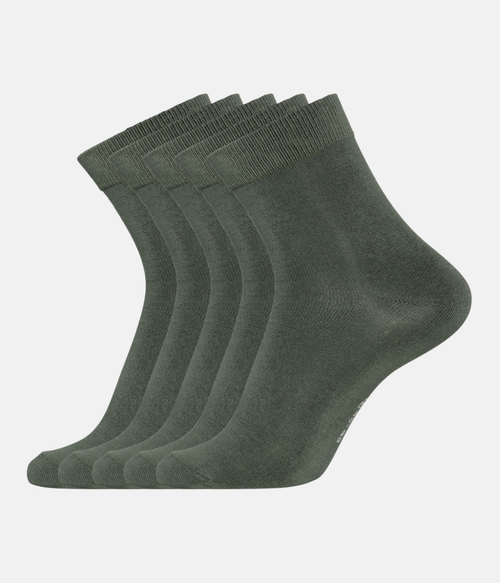
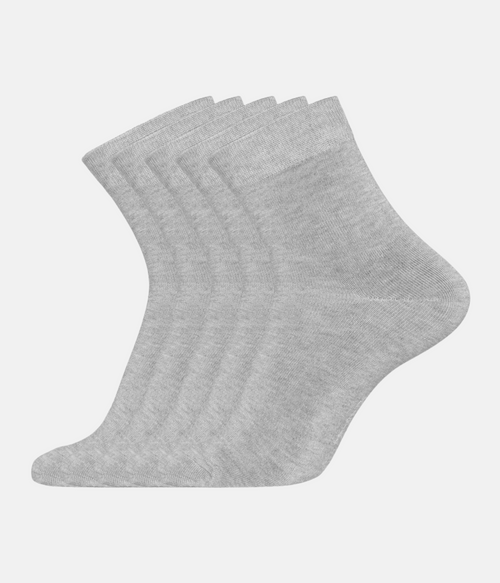
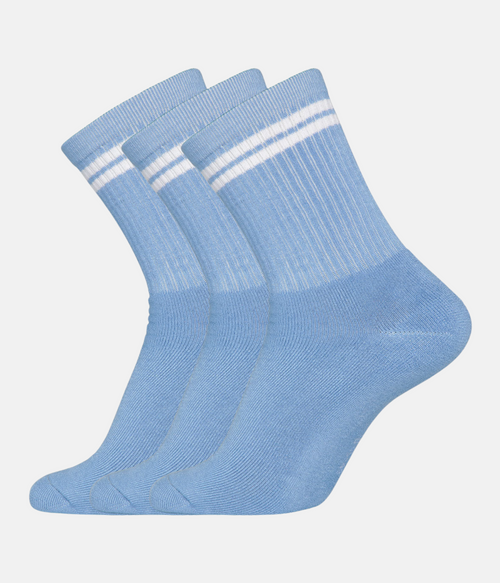
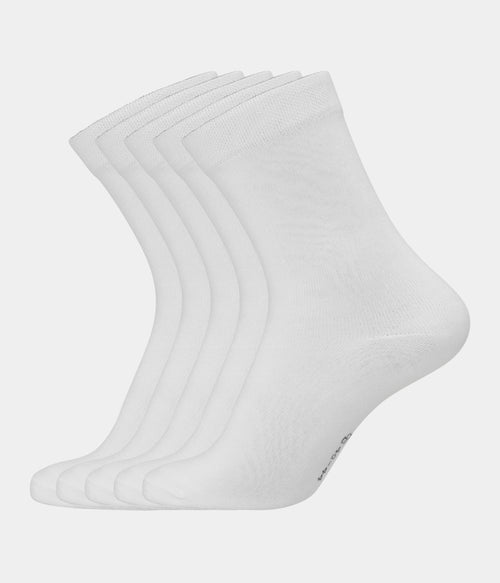
Socks for work shoes
Sep 12, 2026
Short answer: Work shoes are closed and let in little air. The sock therefore has to move moisture away from the foot, or it will be damp before lunch and the rest of the day will feel worse.
A closed shoe means a damp foot
With no air flow, your foot gets damp from its own sweat during the morning. Feet sweat all day, even when you do not notice, and in a closed shoe the moisture has nowhere to go. It stays in the sock and against the skin. That makes the sock the most important choice. See bamboo socks for men.
A fabric that absorbs moisture
A sock that takes up moisture into the fibre itself keeps the skin drier than one that just lets it sit. When the skin is dry, it rubs less against sock and shoe, and the foot feels fresher for longer. Choose a sock with a soft surface and a fit that does not fold under the foot.
The leg must reach above the shoe
If the sock leg is too short, the edge of the shoe rubs directly on the skin. You may not notice it in the first hour, but after a full day it can leave a sore line above the ankle. A leg that reaches well above the edge protects the skin. The same applies higher up. See bamboo undershirts for men.
Reinforced heel and toe
In work shoes, socks wear out fastest at the heel and toe. That is where the pressure is greatest and where holes appear first. A sock reinforced in those two places lasts longer and keeps its shape better. For breaks and the journey home, a soft layer is nice. See bamboo sweatshirt for men.
The fit inside the shoe
A sock that is too big folds and rubs. One that is too small pulls the heel under the foot and presses on the toes. Choose the size that matches your shoe size and check that the heel sits where it should. In a stiff work shoe there is no room for error, so fit matters more than usual.
Change at lunch
A dry pair at lunch is felt all afternoon. Once the sock is saturated it cannot take up any more, and the foot gets both damp and cold. A spare pair in your bag takes up almost no space and takes a minute to change. Leave the shoe open during the break too, so it can air a little.
Looking after the shoe
The sock can only do so much if the shoe never dries. If you can, alternate between two pairs of work shoes so each pair gets a day to dry. Take out the insoles in the evening and leave them somewhere airy. A dry shoe in the morning makes it easier for the sock to keep your foot dry.
Washing the socks properly
Work socks are used hard and washed often. Turn them inside out so lint and dirt from the shoe come out, and wash at a moderate temperature. Avoid fabric softener, which can make the fibres worse at absorbing moisture. Let them air dry so the elastic in the leg lasts longer.
Frequently asked questions
Which socks suit work shoes
A pair that moves moisture, has a reinforced heel and toe, and a leg that reaches above the edge of the shoe. The fit should be close with no folds under the foot.
Why do feet get damp in work shoes
Because the shoe is closed and has no air flow. Sweat cannot escape and stays in the sock, which is why the sock has to do the work.
How often should you change
Every day, and ideally twice on long shifts. A dry pair at lunch is felt all afternoon, and changing takes only a minute.