Why two factories give two fits
Sep 20, 2026
Short answer: The same sewing pattern made in two places rarely gives exactly the same result. Machines, seam width and how much the fabric is stretched while sewing all vary, and you can feel it in the finished garment.
The pattern is only part of the recipe
A pattern describes how the garment should look, but not everything about how it should be sewn. Each factory has its own machines, habits and ways of handling fabric. Small differences in each step add up. The result is that two garments from the same pattern can fit differently, even with the same size on the label.
Seam width moves the measurements
Half a centimetre more in the seam on each side makes the garment two centimetres narrower around, because there are seams on both sides, front and back. That sounds small, but it is enough to feel across the chest and stomach. You notice it in bamboo T-shirts for men.
Fabric is stretched while sewing
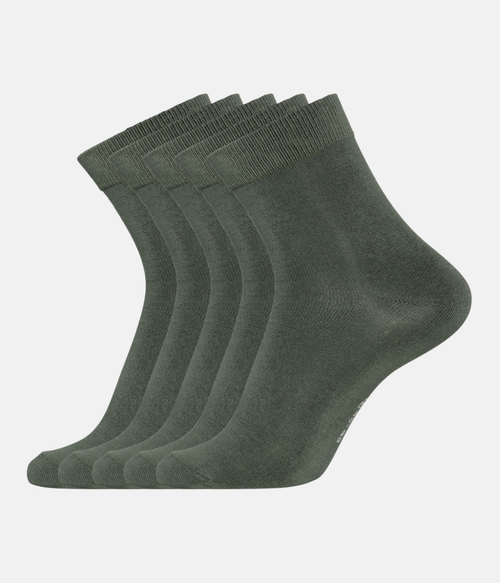
If the knit is pulled slightly as it is sewn, the garment ends up longer and narrower than the pattern says. Some sewers pull more than others, and some machines feed fabric faster. It shows most clearly on long items like socks for men, where a small difference per centimetre adds up over the length.
Machines are different
Sewing machines are set up differently from factory to factory. Stitch length, thread tension and how firmly the presser foot holds the fabric all affect how the seam lies. A tight thread can pull a seam in, while a looser one gives more. These small differences give two garments from the same pattern their own character.
Why one batch is more consistent
Garments from the same factory and the same period resemble each other most, because the same machines and hands made them. That is worth knowing when you rebuy something you like. Take a bamboo tank top for men and compare it with the one you already own.
How to measure a garment flat
Lay the garment flat on a table without stretching it. Measure the width from side seam to side seam just below the sleeve, and the length from the shoulder seam to the hem. Write the numbers down. When you rebuy, measure the new one the same way and see if it falls within what you like.
What is normal
A difference of one to three centimetres in width is common between two production runs. It does not mean one garment is wrong, only that clothes are made by people and machines and are not perfectly identical. If the difference is within what you can feel without it bothering you, the garment is most likely fine.
Tips when you rebuy
Do not rely only on the size on the label. Compare the measurements with a garment you already own and like. Wash the new one before you judge the fit, since the first wash can change the length slightly. And remember that a garment can feel different at first and settle after a few wears.
Frequently asked questions
Can you see which factory a garment comes from
Rarely. The country of origin is on the label, but not the factory. So it is safer to measure the garment than to go by the label.
How big can the difference be
One to three centimetres in width is common between two production runs. That matches seams set slightly differently on each side.
What can you do about it
Measure the garment flat when you rebuy, rather than relying only on the size. Compare it with one you know fits well.