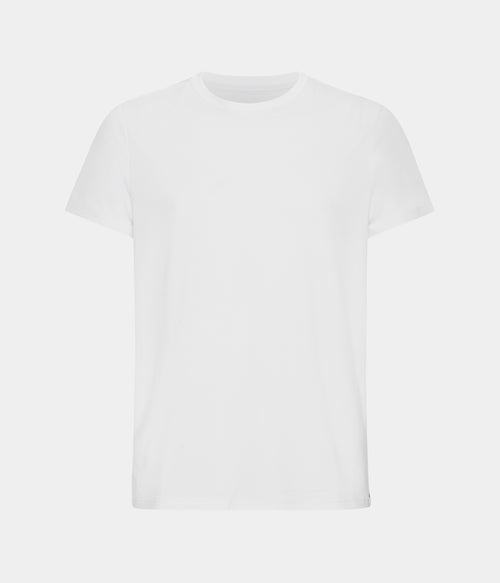
Why viscose feels cool
Sep 12, 2026
Short answer: Viscose draws heat away from the skin faster than cotton, which is why the fabric feels cool the moment it touches you. The fibre also absorbs moisture and spreads it out so it can evaporate, which keeps the cool feeling going a little longer, even in a warm room.
Heat conduction in the first second
When you pull on a T-shirt, your skin meets fabric at room temperature. A fabric that conducts heat well pulls warmth away from the skin straight away, and that registers as cool. Viscose does this faster than cotton of the same weight. That is why many men notice the difference within the first minute of wearing it.
Why the skin reads it as cold
Your skin does not measure the temperature of the fabric. It senses how quickly heat leaves the body. A metal railing and a wooden table in the same room share a temperature, yet the metal feels colder because it moves heat faster. Viscose is nowhere near metal, but the principle is the same. Browse all men's clothing to compare.
Moisture leaves faster
The second reason is moisture. Viscose absorbs moisture into the fibre itself and spreads it over a larger area where it can evaporate. Evaporation needs heat, and that heat comes from the fabric and the skin underneath. It is the same effect as a breeze on damp skin. The result is a fabric that does not feel clammy on a warm day.
How long the effect lasts
The cool feeling is not endless. It lasts as long as there is moisture to evaporate and the fabric has not reached skin temperature. After an hour of sitting still in the heat, the difference evens out. You notice the effect most when you move, switch between indoors and outdoors, or have just put the shirt on.
Why thin fabric is not always cooler
Many people reach for the thinnest fabric when it gets hot. But a thin polyester can feel warmer than a thicker viscose, because it neither conducts heat well nor absorbs moisture. Sweat stays on the skin and the fabric sticks. The material matters more than the thickness, so check the care label before you judge the weight.
Fit plays a part too
A T-shirt with a little room lets air move between fabric and skin, so moisture can escape. If it sits tight across the chest and shoulders, you lose some of that effect because the fabric is always in contact. Choose your usual size rather than sizing down in summer. See our bamboo T-shirts for men.
Using it in everyday life
Viscose helps most when the temperature changes: the bike ride to work, the office in the afternoon, or a summer evening that starts warm and then cools. Wear a viscose T-shirt as the base layer and add a shirt or jumper on top when it gets cooler. Many start with one of the most popular pieces for men.
Washing that keeps the feel
The cool, smooth surface lasts best with gentle washing. Wash at a low temperature, preferably inside out, and skip fabric softener, which can coat the fibres and make them worse at taking up moisture. Dry on a hanger or rack rather than in the tumble dryer. That way the fabric keeps its surface and its handling of moisture for longer.
Frequently asked questions
Why does viscose feel cool straight away
Because it draws heat away from the skin faster than most other materials of the same thickness. The skin reads that quick loss of heat as cold within the first second.
Does viscose stay cool
Only while there is moisture left to evaporate. After an hour of sitting still in the heat, the difference evens out until you start moving again.
Is thin fabric always cooler
No. The material matters more than the thickness. A thin synthetic fabric can easily feel warmer than a thicker viscose, since it neither conducts heat well nor absorbs moisture.