Blends with cotton, when they make sense
Sep 12, 2026
Short answer: A blend takes the best from two fibres. Cotton brings strength and shape, while bamboo viscose brings softness and moisture transport. A blend makes most sense in clothing that takes hard wear and frequent washing, while pure bamboo viscose suits pieces where softness against the skin matters most.
Why blend two fibres
No fibre is best at everything. Cotton is robust but less smooth. Bamboo viscose is soft and moves moisture, but copes a little less well with hard wear. Spinning the two together gives a fabric that sits somewhere in between. It is not about saving money, but about choosing the combination that suits what the garment is for.
Cotton adds strength
Cotton fibres make the fabric more resistant to hard wear and frequent washing. They also give it a little more firmness, so it keeps its shape better when it is pulled and stretched during the day. You notice it most in places that see a lot of friction. Browse all men's clothing to compare materials.
Bamboo viscose adds softness
The viscose makes the surface smoother and moves moisture away from the skin faster. It also gives the fabric a soft drape, so it settles around the body instead of standing away. In a blend, the viscose is what you feel on the skin, and the cotton is what holds the shape. See the most popular pieces for men.
Where a blend works best
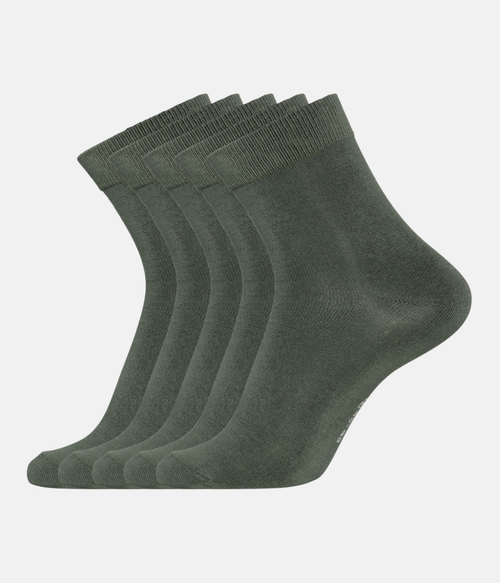
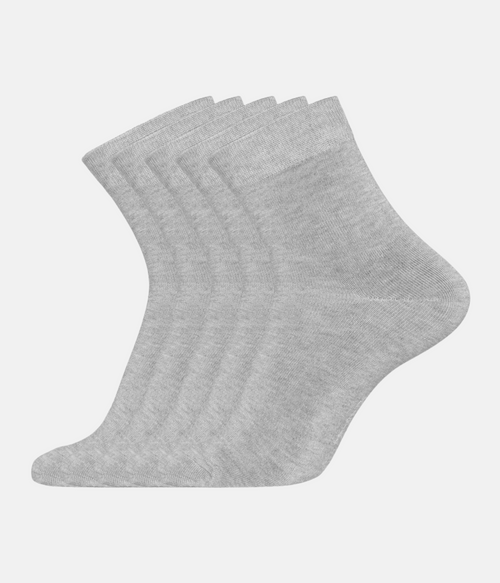
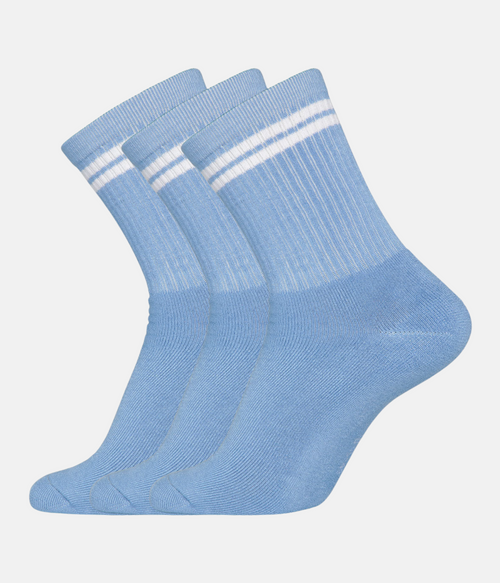
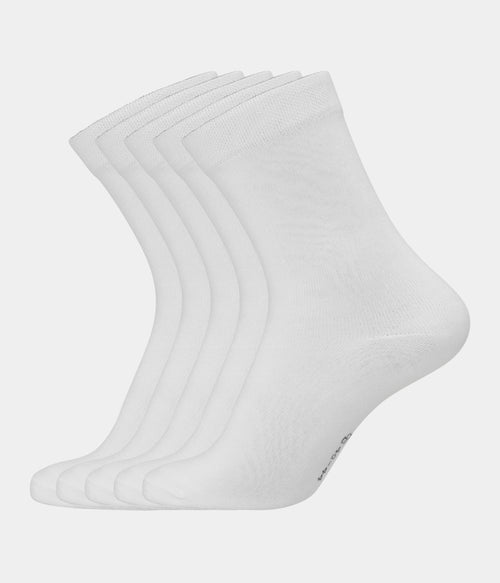
In items that take hard wear, such as socks, a blend gives a longer life without costing comfort. The heel and toe rub against the shoe all day, and here the strength of cotton makes a difference. The viscose keeps the foot from feeling clammy after hours in closed shoes. See our bamboo socks for men.
When pure bamboo viscose is better
Where softness matters most and wear is lighter, pure bamboo viscose makes good sense. That usually means clothing worn close to the skin for many hours but not rubbed hard against anything. Here the smooth surface and moisture transport count for more than the extra strength. A T-shirt worn under a shirt is a good example.
How to read the content label
The content label shows which fibres the fabric is made of and how much of each it contains. As a rule of thumb, the more viscose, the softer and smoother it feels, while more cotton gives a firmer fabric that takes more wear. Use the label to know what to expect before choosing between two similar pieces.
Washing blends
A blend should be washed according to its most delicate fibre, which is usually the viscose. Follow the care label, wash inside out at a low temperature, and avoid the tumble dryer. Viscose can shrink with a lot of heat. The cotton in the blend does not change that, so treat the garment as if it were pure viscose.
How to choose
Think about what the garment is for before you look at the material. If it needs to handle hard wear and many washes, a blend is a good choice. If it should above all feel soft and sit calmly against the skin, pure bamboo viscose is the obvious pick. Many men keep both in the drawer for different parts of the week.
Frequently asked questions
Why blend two fibres
Because each has its own strength. Cotton handles wear, while bamboo viscose is soft and moves moisture. Together they make a fabric that sits between the two.
Is a blend worse than pure bamboo viscose
No, just different. A blend takes more wear but usually feels a touch less smooth against the skin than pure bamboo viscose does.
Where are blends most common
In socks and in clothing washed often, where durability matters more than the last bit of softness. The heel and toe are typical places where strength counts.