Why some fabrics bobble and others do not
Sep 12, 2026
Short answer: Pills form where short fibre ends tangle together under friction. Smooth fabrics made of long fibres have almost no ends to tangle, so they keep a neat surface for longer. How much a fabric pills therefore depends on both the fibre type and how much it is rubbed in daily use.
Friction is the trigger
Pills appear where the fabric rubs against something else. Typical spots are under a bag strap, at the side where the arm moves, or where a seat belt crosses the chest. Without friction, almost nothing happens, whatever the fibre. That is why pills often show up in the same place on all your tops. See our bamboo T-shirts for men.
Fibre type decides how bad it gets
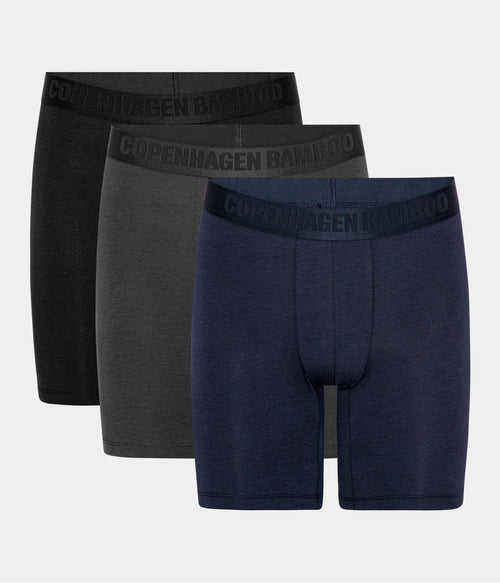
Short natural fibres pill the most, because there are many loose ends on the surface. Long regenerated fibres pill the least, since they have hardly any ends. Synthetic fibres are a case of their own: they can pill, and because the fibres are very strong, the balls stay on instead of falling off. Browse bamboo underwear for men.
Knit density plays a part
The way a fabric is knitted matters too. A loose knit lets the fibres move more and gives them more chances to tangle. A tight knit holds them in place. Two tops made of the same material can therefore behave differently. If the fabric feels firm and even in your hand, it usually keeps its surface better.
Why pills do not mean poor quality
Many people see pills as a sign of cheap clothing. But pilling comes down to fibre type and friction, not to how well the fabric is made or what it cost. An expensive wool jumper can pill more than a simple T-shirt. So pills are not a product fault but a result of material and use.
Keeping them down in the wash
Wash inside out so the surface does not rub against the drum and other clothes. Keep hard materials such as jeans, zips and Velcro out of the same load. Do not fill the machine to the top, so the clothes can move freely. Choose a low spin speed and air dry rather than using the tumble dryer.
Keeping them down in daily use
There is plenty you can do day to day as well. Switch shoulders when you carry a bag, so the friction does not always hit the same spot. Use a backpack with soft straps if you walk a lot. Give garments a day off between wears. The same goes for a bamboo boxer, which rubs against your trousers all day.
The fabric shaver is your friend
Once pills have formed, a fabric shaver removes them in a minute. Lay the garment on a flat surface, stretch it slightly and move the shaver in small circles without pressing. The fabric is not harmed as long as you do not push hard. Empty the container along the way. Afterwards the top looks almost new.
When to hold back
Very thin fabrics and knits with loose stitches need care. A shaver can catch a stitch and pull it out. Use a fabric comb instead, or pick off the largest pills with your fingers. Always test first on a spot that does not show, such as the inside of a seam, to see how the fabric reacts.
Frequently asked questions
Do pills mean the quality is poor
No. Pilling depends on fibre type and friction, not on how well the fabric is made or what it cost. Even expensive clothing can pill if it is rubbed a lot.
Can pills be removed
Yes. A fabric shaver takes them off in a minute, and the fabric is not harmed as long as you keep the shaver flat and do not press hard.
How do you avoid them
Wash inside out, keep hard materials such as zips out of the same load, and switch shoulders with your bag so the friction does not always hit one spot.