Socks for rubber boots at work
Sep 12, 2026
Short answer: Rubber does not let moisture out. Everything the foot gives off stays in the boot, which is why the sock is the only thing that can keep the skin dry through a long working day.
Rubber lets nothing out
Moisture can neither evaporate nor pass through rubber. That is exactly what makes rubber boots good against water from outside, but it works the other way too. The sweat your foot gives off during the day stays in the boot. After a few hours the foot can be as wet as if the boot leaked. See socks for men.
The sock must be able to absorb
A fabric that takes up moisture into the fibre keeps the skin drier than one that only moves it to the surface. In a rubber boot there is nowhere for moisture to go, so the sock has to hold it away from the skin. The same applies under workwear higher up. See bamboo tank top for men.
The leg must be long enough
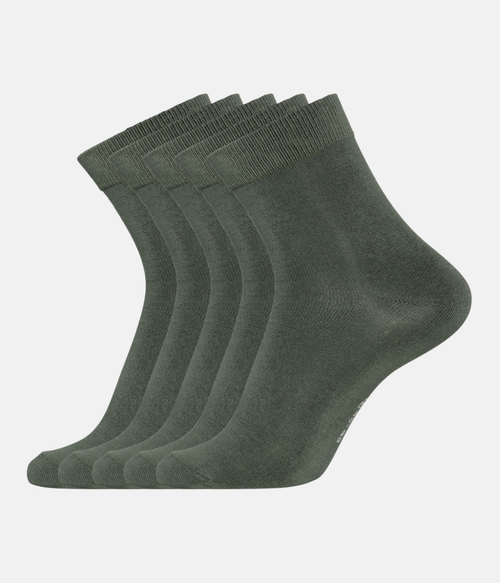
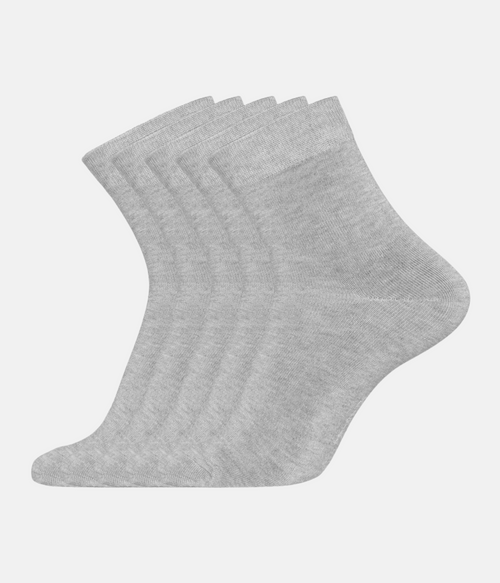
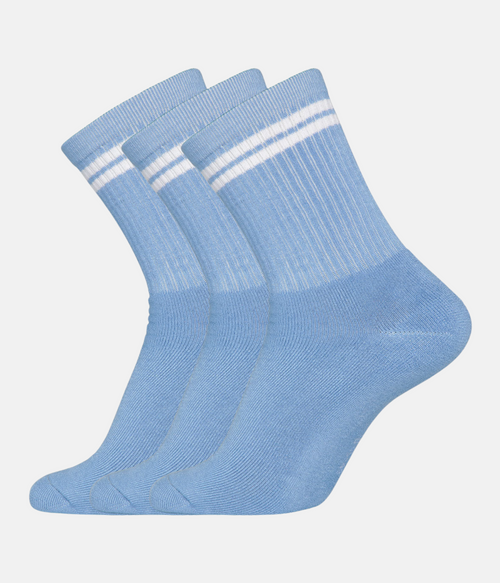
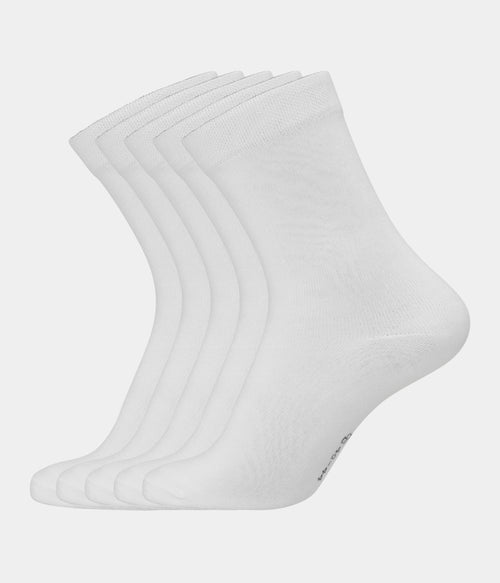
Rubber boots are tall, and the edge rubs the calf if the sock is too short. A long leg protects the skin all the way up and stops the sock slipping down into the boot. A sock that creeps under the heel soon becomes a lump and a pressure point. Choose a leg that reaches well above the boot.
Change at midday
In rubber boots, a dry pair at lunch is the most effective thing you can do. Once the sock is saturated it takes up nothing more, and the foot gets cold. A spare pair takes up almost no space in your bag. A soft set for the break and the trip home helps too. See bamboo joggers for men.
Air the boots during breaks
Take your boots off during breaks and let them air. Ten minutes without boots does more than most people think. Both foot and boot get a chance to lose some of the moisture. Stand the boots with the opening upwards, ideally somewhere dry. It helps the next pair of socks last longer.
Drying after work
Rubber boots dry very slowly inside because air cannot get through. Take out the insole in the evening and leave the boots somewhere warm and airy. If you have two pairs, alternate so each pair gets a day. Avoid putting them right against a hot radiator, as that can damage the rubber.
Fit and size
A rubber boot often fits more loosely than a laced shoe, and the foot slides a little with every step. A sock that sits close and does not fold reduces rubbing. Choose the size that fits your foot so the heel sits correctly. A sock that is too big soon folds in a loose boot.
Washing and care
Socks worn in rubber boots are used hard and should be washed after every wear. Turn them inside out and wash at a moderate temperature. Avoid fabric softener, which can make the fibres worse at absorbing moisture. Let them air dry completely before wearing them again.
Frequently asked questions
Which socks suit rubber boots
A pair that absorbs moisture into the fibre itself. Rubber lets nothing out, so the sock must hold moisture away from the skin and have a leg that reaches above the edge.
Why do feet get so wet in rubber boots
Because rubber is completely sealed. Sweat can neither evaporate nor escape, so it stays in the boot, even though the boot keeps water out.
What can you do besides changing
Take your boots off during breaks and let them air. Ten minutes without boots does more than most people think, and dry boots in the morning help all day.