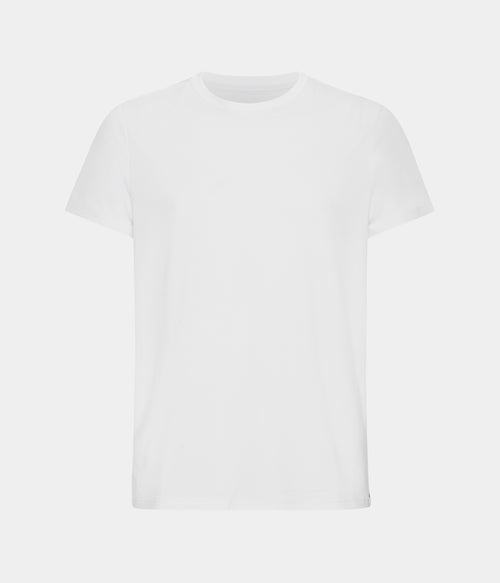
Thin fabric is not the same as weak fabric
Sep 12, 2026
Short answer: Strength comes from the quality of the yarn, not from how much fabric there is. A thin fabric made from long, fine yarn can last longer than a thick one made from short yarn.
The yarn decides the strength
Long fibres spun tightly give a strong thread, however thin the fabric is. When fibres are long, they overlap along a greater length of the thread and hold together better. A tight spin presses the fibres close and makes the thread more resistant to wear and washing, see bamboo sweatwear.
Short fibres make weaker yarn
Short fibres have fewer places to hold on to each other. When the thread is pulled and rubbed, they slip out more easily, leaving thin areas and fuzz on the surface. A thick fabric can easily be made from short fibres. It may feel substantial in the shop, but it wears faster than its thickness suggests.
Thickness is about warmth
A thick fabric insulates better, but it says nothing about how many washes it can take. Thickness traps air between the threads, and that air holds warmth. It is a useful quality when you need a warm layer. But warmth and durability are two different things, and one does not automatically follow from the other, see the range for men.
Where you see the difference
A thin quality fabric keeps its shape, while a thick cheap fabric quickly turns baggy. It shows most at the knees, elbows and pockets, where the fabric is stretched many times a day. A good yarn springs back after each stretch. A weak yarn gives way and stays in the new shape, see bestsellers for men.
Pilling tells you about the yarn
Small bobbles on the surface form when short fibres work their way out of the thread and tangle together. The more short fibres, the more pilling. So it is a good sign if a fabric keeps a smooth surface after many washes. If you see pilling early, it often suggests the yarn is spun from shorter fibres.
Thin fabric needs a little care in the wash
A thin fabric handles a normal wash, but it benefits from a little care. Wash it inside out so the surface does not rub against the drum, and do not fill the machine completely. Avoid washing thin clothes with items that have zips or hooks that can catch. Dry it on a rack rather than in the tumble dryer.
What to look for
Look at the surface. A smooth, even face without pilling points to long fibres and a tight spin. Stretch the fabric lightly and let go. If it springs back neatly, the yarn is good. Hold it up to the light and see whether the knit is even. That tells you more about durability than thickness alone.
Choose thickness by season
Once you know that thin does not mean weak, you can choose thickness by use. In summer and as an inner layer, a thin fabric makes most sense, because it is light and airy. In winter and as an outer layer, a thicker fabric gives warmth. In both cases, the quality of the yarn decides how long the clothes last.
Frequently asked questions
Does thick fabric last longer than thin
Not automatically. The quality of the yarn matters more than thickness for how many washes a garment can take, and a thin fabric made from good yarn can last a long time.
What should you look for then
Fibre length and how tightly the yarn is spun. In practice, you can see it in whether the surface is smooth and even.
When is thick fabric the better choice
When you need warmth. For an outer layer in the colder half of the year, thickness makes sense in itself.