Why fabric can turn see through
Sep 12, 2026
Short answer: Fabric turns see-through where it is stretched the most. The threads slide apart and larger gaps appear that let light through. Over time, wear makes each thread thinner, and the gaps grow even larger.
Stretch opens the gaps
A knitted fabric is made of small loops lying close together. When the fabric is stretched, the loops are pulled lengthwise and small openings appear between the threads. Across the shoulders, at the elbows and on the back of an undershirt, the fabric stretches every day as you bend, reach or sit. See men's bamboo undershirts.
Wear thins the threads
Every time the fabric rubs against a chair back, a bag or another layer, a little of each thread's surface wears away. You cannot see it from day to day, but over many months the threads become thinner than when they were new. Thin threads fill less space, so more light passes through. See men's bamboo tank tops.
Where you notice it first
Usually on the back, where you sit, and across the shoulders, where a bag strap or backpack rubs. The elbows often follow, because they bend many times a day. Hold the garment up to a window now and then. You will see whether the fabric has become lighter in some places before it shows on the body.
Size matters more than you think
A garment that fits too tightly is stretched all day, even when you stand still. The loops never get to contract again, and the fabric thins faster. Choose a size where the fabric rests against the body without pulling. If you are between two sizes, the larger one often lasts longer in the exposed areas.
Wash inside out
In the washing machine, clothes rub against the drum and against each other. Turned inside out, the inner side takes most of the friction while the outer side is spared. Wash at a low temperature, use a mild detergent and do not fill the drum completely. That gives the clothes room to move without extra rubbing.
Do not hang wet clothes on a hanger
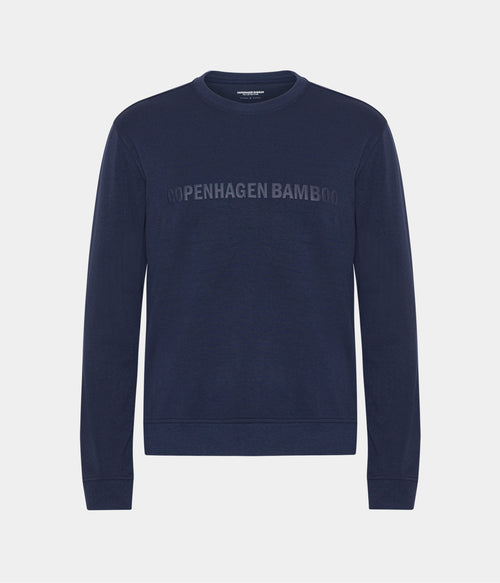
Wet fabric is heavier and gives more than dry fabric. Hang a wet top on a hanger and the weight of the water pulls at the shoulders, stretching the fabric exactly where it is already most exposed. Lay the garment flat to dry instead, or fold it over a line at the middle. See men's bamboo sweatshirts.
When the fabric is worn thin
Once the threads have thinned, the fabric cannot be restored. Neither a special wash nor ironing brings the body back. A see-through garment can still be worn at home, for training or as a base layer where it does not show. As a visible top, though, it is usually done, and it is time to replace it.
A dense fabric lasts longer
The closer the loops sit from the start, the longer it takes before gaps become visible. A fabric with an even knit and uniform threads stretches more evenly and spreads the wear better. Feel the fabric when you buy, and hold it up to the light. That gives you an idea of how densely it is knitted.
Frequently asked questions
Why does a garment become see-through
Because the threads slide apart where the fabric is stretched, and because each thread gets thinner with wear. Both create larger gaps that let light through.
Can it be fixed
No. Once the threads are worn thin, the fabric does not come back. The garment is done as a visible top, but it still works at home or as a base layer.
Where does it happen first
Across the shoulders and elbows, and on the back where you sit. That is where the fabric is stretched and rubbed the most on an ordinary day.