What chlorine does to a fibre
Sep 20, 2026
Short answer: Chlorine is a strong oxidising agent that breaks the long molecular chains in the fibre. The fabric first turns lighter, then weaker and finally yellow. The damage is fast and cannot be undone, so the best advice is to keep chlorine away from your clothes.
What chlorine does chemically
Chlorine reacts with almost any organic material it touches. It takes electrons from molecules and breaks them into smaller pieces. That is what makes it effective against stains and bacteria. But fabric is organic material too, and chlorine does not tell the difference between a stain and a fibre.
The breakdown happens from within
Chlorine attacks not only the dye but the structure of the fibre itself, which is why fabric loses strength. Fibres are made of long chains, and when those break they become shorter and weaker. This applies especially to viscose, as in bamboo sweatpants for men, which is made from cellulose.
First lighter, then weaker
The first thing you see is the colour bleaching. The next thing you only notice later: the fabric turns thinner, less stretchy, and may tear at seams or develop small holes. This often happens with no visible warning. A top can look fine after bleaching yet last much shorter than before.
Yellowing comes later
Once the fibre molecules are broken, compounds form that reflect yellow light. You see it on white items like bamboo undershirts for men after repeated bleaching. It is a paradox that the product used to make white whiter ends up making it yellow, because it damages the fibre itself.
What to use instead
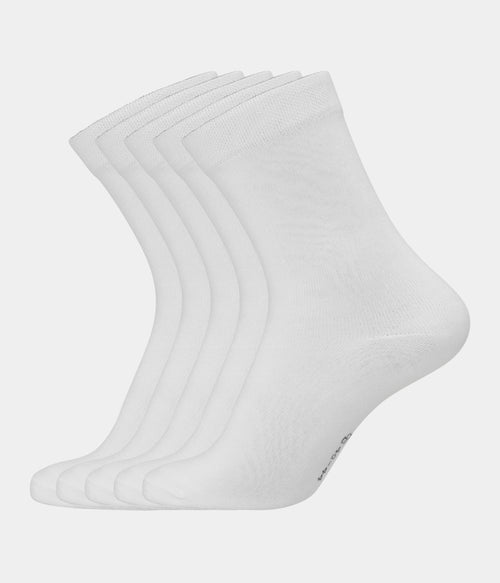
Oxygen based bleach works more slowly but harms fibres much less. Use it no more than a couple of times a year on white socks for men or other white items that need freshening. Follow the dosage on the pack and wash at the temperature on the care label.
Other ways to keep white white
The best approach is to stop white turning grey in the first place. Wash whites separately so they do not pick up colour from other clothes. Use the right amount of detergent, since too much can build up in fabric. Dry whites in the shade and treat stains straight away while fresh.
Chlorine in everyday life
Chlorine is not only found in bleach. Many bathroom and kitchen cleaners contain it too. A splash from a spray can leave a pale spot on a dark top. Wear old clothes when you clean, and rinse with plenty of water at once if an accident happens.
Frequently asked questions
How quickly does chlorine work
Very quickly. A single treatment can cost noticeable strength, so using chlorine only rarely is not enough if you want to protect the fibres.
Is chlorine in tap water a problem
No, the concentration is far too low to harm clothes. You can wash in ordinary tap water without worrying about chlorine.
What about chlorine in swimming pools
There the concentration is high enough to bleach swimwear over time. Rinse swimwear in clean water after every visit so the chlorine does not stay in the fabric.