What happens to the fibres in the washing machine
Sep 12, 2026
Short answer: In the machine the fibres get wet, warm and moved around. All three wear them down a little, and it is the sum of them that decides how long your clothes last. You can adjust all three.
Water makes the fibres swell
Cellulose fibres absorb water and become temporarily weaker while they are wet. Water gets in between the molecules, the fibre swells, and the structure becomes softer and more yielding. Once the fabric dries, its strength returns. So clothes are at their most vulnerable while they are in the machine and just after, when they are still wet and heavy.
Movement pulls at the surface
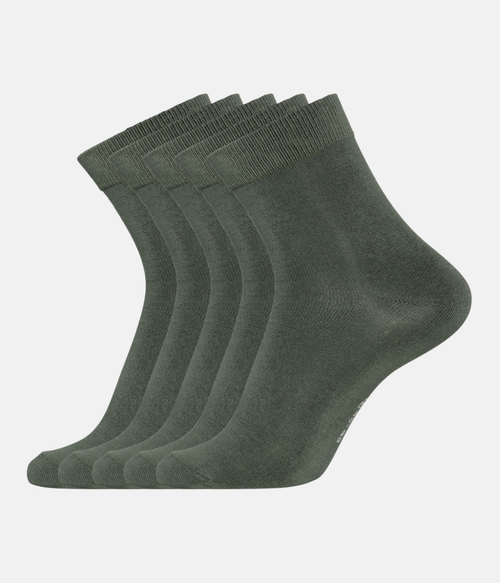
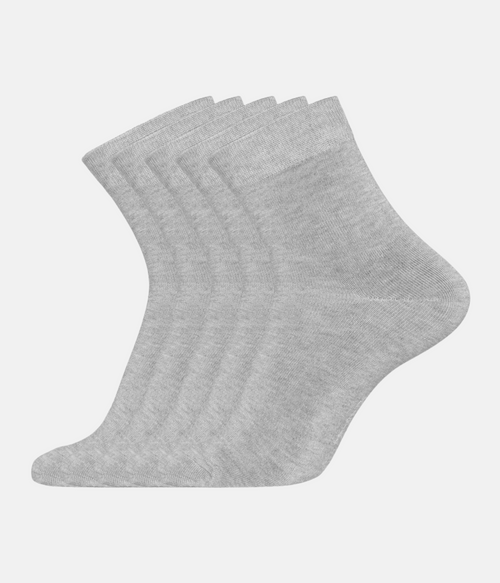
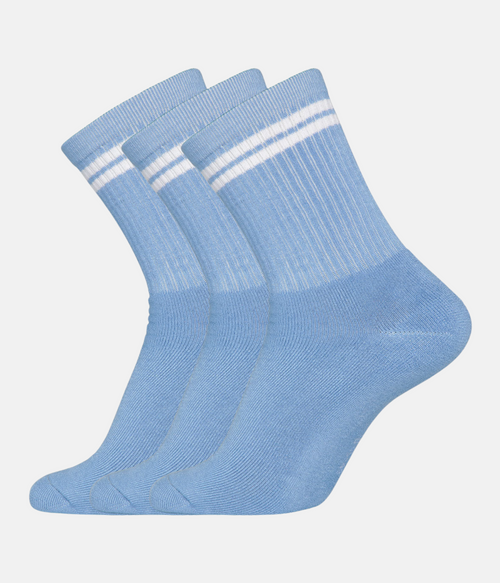
The drum lifts the laundry and drops it again and again, and the fabrics rub against each other and against the drum wall. That movement pulls tiny fibre ends out of the yarn, and that is the start of pilling. Socks are especially exposed, as they already take wear at the heel and under the foot. See socks for men and women.
Heat is the hardest
High temperatures weaken both fibres and elastic for good, and the damage cannot be undone. The elastic in waistbands and sock cuffs loses its ability to pull back, and the fibres become more brittle. It does not happen in one wash but over many. Clothes worn against the skin, like bamboo T-shirts for women, last longest at low temperatures.
Spinning and the tumble dryer
After the wash comes the spin, where the laundry is pressed against the drum wall at high speed. It removes water but also pulls on the wet, weaker fabric. Afterwards the tumble dryer can add both heat and more movement. A lower spin speed and drying on a line or rack spare the fibres, and the clothes keep their shape better.
Turn clothes inside out
When clothes are turned inside out, it is the inside that rubs against the drum and the rest of the laundry. The outside, the side you see, is spared. That means less pilling on the visible side and colour that stays nicer for longer. It is a small habit that takes a few seconds, and it works for socks, T-shirts and underwear alike.
Load the machine sensibly
An overfilled machine means more rubbing between items, while a half empty machine lets the laundry fall further and harder. The best is a sensibly filled machine, where clothes can move freely without being thrown around. Wash thin items with other light things rather than with heavy towels or jeans.
A laundry bag for small items
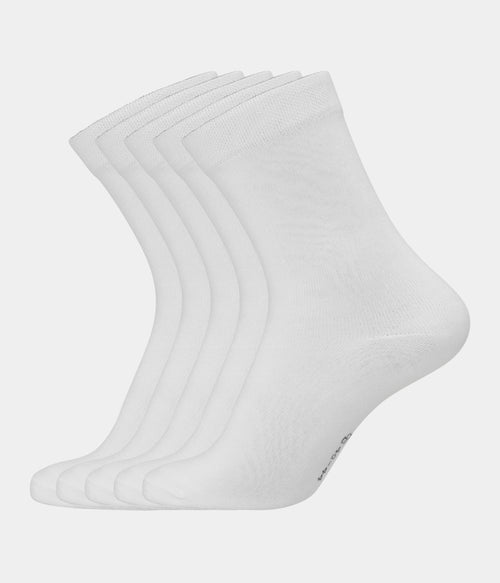
Socks and other small items can go in a laundry bag. The bag takes some of the friction, and small things do not disappear into the rubber seal or get tangled up with larger pieces. It is especially useful for thin socks, where a little less rubbing makes a difference to how long they last. See bamboo socks.
How to make clothes last longest
Wash at a low temperature, use a gentle programme, turn clothes inside out and let them dry on a line. Do not use more detergent than needed, and only wash when the clothes need it. Each of these steps spares the fibres a little wear, and together they make a clear difference to how many washes your clothes can handle.
Frequently asked questions
What causes the most wear in a wash
Heat. Water and movement cause wear too, but temperature does the most damage to both fibre and elastic, and that damage cannot be undone afterwards.
Why are wet fibres weaker
Because water gets in between the molecules and makes the structure more yielding until the fabric dries again. That is why wet clothes should be handled with extra care.
How many washes does a garment last
With gentle washing, typically a hundred or more. With hot washes and a tumble dryer the number can be less than half, so your washing habits matter a great deal.