Why T-shirts cost such different amounts
Sep 12, 2026
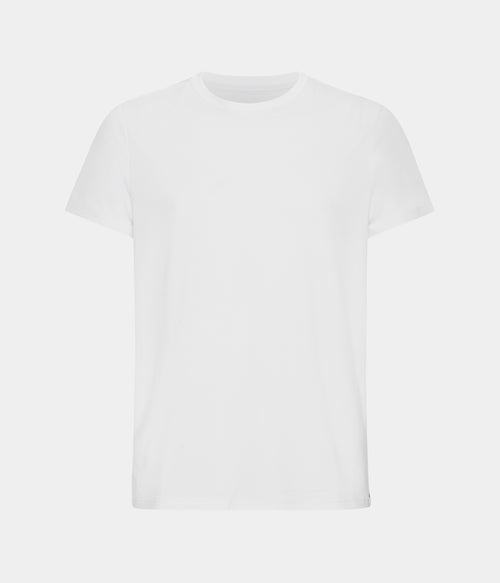
Short answer: The price of a T-shirt depends on the fibre, the weight of the fabric, the stitching and how many steps there are between factory and customer. Two T-shirts that look alike on a hanger can therefore be very different once they have been worn and washed for a while.
Fibre and fabric weight
A heavier quality contains more material and so costs more to produce. The fibre matters too, because some raw materials and processes are more expensive than others. A thin T-shirt can feel nice in the shop, but it wears faster and loses its shape. Feel the fabric between your fingers and compare the qualities among the most popular men's pieces.
Stitching decides durability
Double stitched hems, a reinforced neck and flat seams take longer to sew and cost more to produce. In return, they keep their shape longer and the seams do not come undone as easily. Turn a T-shirt inside out and look at the seams: if they are straight, tight and flat, that is a good sign. See the models among the most popular women's pieces.
Dyeing and finishing
Dyeing and finishing are steps you cannot see on the price tag, but they affect how the T-shirt looks after many washes. Careful dyeing gives an even colour that lasts better. Some fabrics are also pre-shrunk so they change less in the wash. That costs a little extra, but you notice it over time.
Steps between factory and customer
A large part of the price does not go to the T-shirt itself, but to the steps it passes through: importer, wholesaler, shop and marketing. The more steps, the larger the share of the price that goes to something other than fabric and stitching. That is why two T-shirts of the same quality can cost different amounts, depending on how they reach you.
The brand name
A well known brand often costs more, because part of the price covers the name and the advertising. That does not necessarily say anything about quality, in either direction. Look at the T-shirt itself rather than the logo: fabric weight, seams and neckline. Those are what decide how well it holds up in everyday use.
Price per wear is the right measure
A more expensive T-shirt that lasts three years is cheaper per wear than a cheap one that lasts one. Roughly count how many times you wear it before it is worn out. That gives a fairer picture than price alone. Browse the men's range and think about how often you will wear it.
How to check quality yourself
Hold the fabric up to the light: if it is very see-through, it is thin. Gently pull the neckline and see whether it springs back. Look at the seams inside and feel whether they are flat. Check the care label so you know whether the T-shirt needs special care. These four checks take a minute and say more than the price.
Care extends its life
Whatever the price, care matters a lot for how long a T-shirt lasts. Wash at 30 or 40 degrees with a mild detergent, turn it inside out and avoid the tumble dryer. Hang it to dry rather than laying it on a warm radiator. That way you get the most out of what you paid, whether it was a lot or a little.
Frequently asked questions
Is expensive always better
No. Price says something about material and stitching, but not everything, as part of it can go to the name and middlemen. Look at fabric weight and seams.
What should I look for in quality
The fabric weight, whether the neckline has a firm rib that springs back, and whether the seams are straight, tight and flat on the inside.
Does an expensive T-shirt last twice as long
Not automatically. Washing, drying and how often you wear it matter at least as much as the price for how long it lasts.