When you should not repair
Sep 20, 2026
Short answer: Skip the repair when the fabric is thin in several places, when the elastic has gone slack all the way round, or when the colour has faded so much that you will not wear the garment anyway. In those cases you spend time on something that will not return to the wardrobe.
Thin patches in several places
If there are two or three thin patches, a fourth will follow soon. Fabric wears evenly, and once it has started, it goes on. You can close one hole, but the next one appears right beside it. Then the whole fabric is going, and that also applies to bamboo sweatpants for women, which often wear at the knees and seat.
Dead elastic cannot be revived
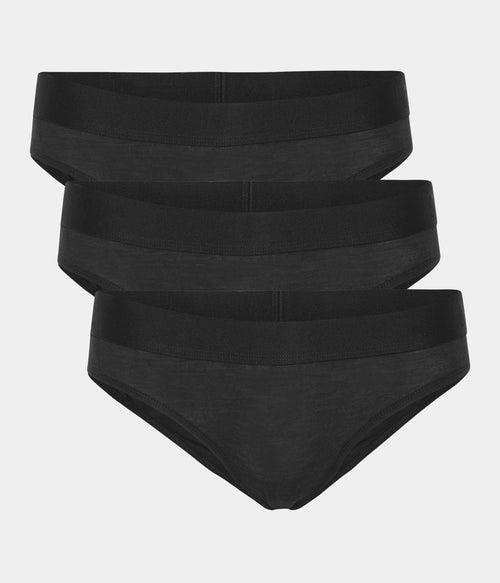
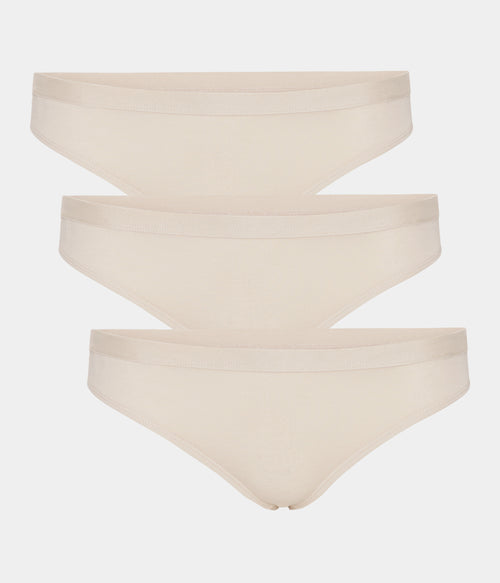
If the waistband is wavy and slack all the way round, the elastane has broken down and a new seam will not help. You can see it as small ripples in the fabric and feel it when the garment no longer stays in place. This matters most in bamboo underwear for women, where the waistband does most of the work.
The garment must still be worn afterwards
A repair only makes sense if you actually put the garment on again. If it has faded, lost its shape or no longer fits, it will stay in the drawer however neatly you sew. Be honest with yourself. Pass it on instead and find something you will wear, for example among the most popular pieces from Copenhagen Bamboo.
When the repair gets bigger than the garment
Some damage needs so much work that you are really sewing a new garment. A large hole in thin fabric has to be patched, and the patch changes how the garment hangs and feels. If the repair takes hours and the result is uncertain, it is rarely worth it. Set yourself a limit, such as half an hour, and stick to it.
When the fabric itself has changed
Fabric can turn stiff or fuzzy and lose its softness after many washes. It happens slowly, and you may only notice when you compare with a new garment. A repair does not change the fabric itself. If the garment no longer feels nice to wear, it has done its job and can get a second life as a cleaning cloth.
Three signs a garment is used up
The fabric is thin in several places, the elastic is dead, and the colour is gone. If a garment shows all three, it is used up. If it shows only one, a repair may still pay off. This simple rule helps you decide quickly, so you do not end up with a pile of things you mean to look at some day.
What to do instead
Clothes that cannot be repaired can still be useful. Cut them into cleaning cloths, use them to polish shoes, or take them to a textile collection point. If the garment is whole but does not fit, someone else may be able to use it. What matters is that it does not sit in the wardrobe taking space from the clothes you wear each week.
Learn from what broke
Look at where the garment failed and how you wore it. If the knees wear quickly, wash on a gentle cycle and skip the tumble dryer. If the waistband goes first, choose a size that does not stretch it as much. That knowledge helps your next garment last longer, so you are not facing the same problem again in a year.
Frequently asked questions
What do you do with things that cannot be repaired
Take them to a textile collection point or cut them into cleaning cloths. That way the fabric still gets used, even when the garment no longer works as clothing.
Can a tailor save more than you can
Often yes, especially with elastic and zips. But a tailor cannot make thin fabric new, and dead elastic has to be replaced completely rather than repaired.
When is a garment used up
When the fabric is thin in several places, the elastic is dead and the colour is gone. If a garment shows all three signs at once, a repair is rarely worth trying.